

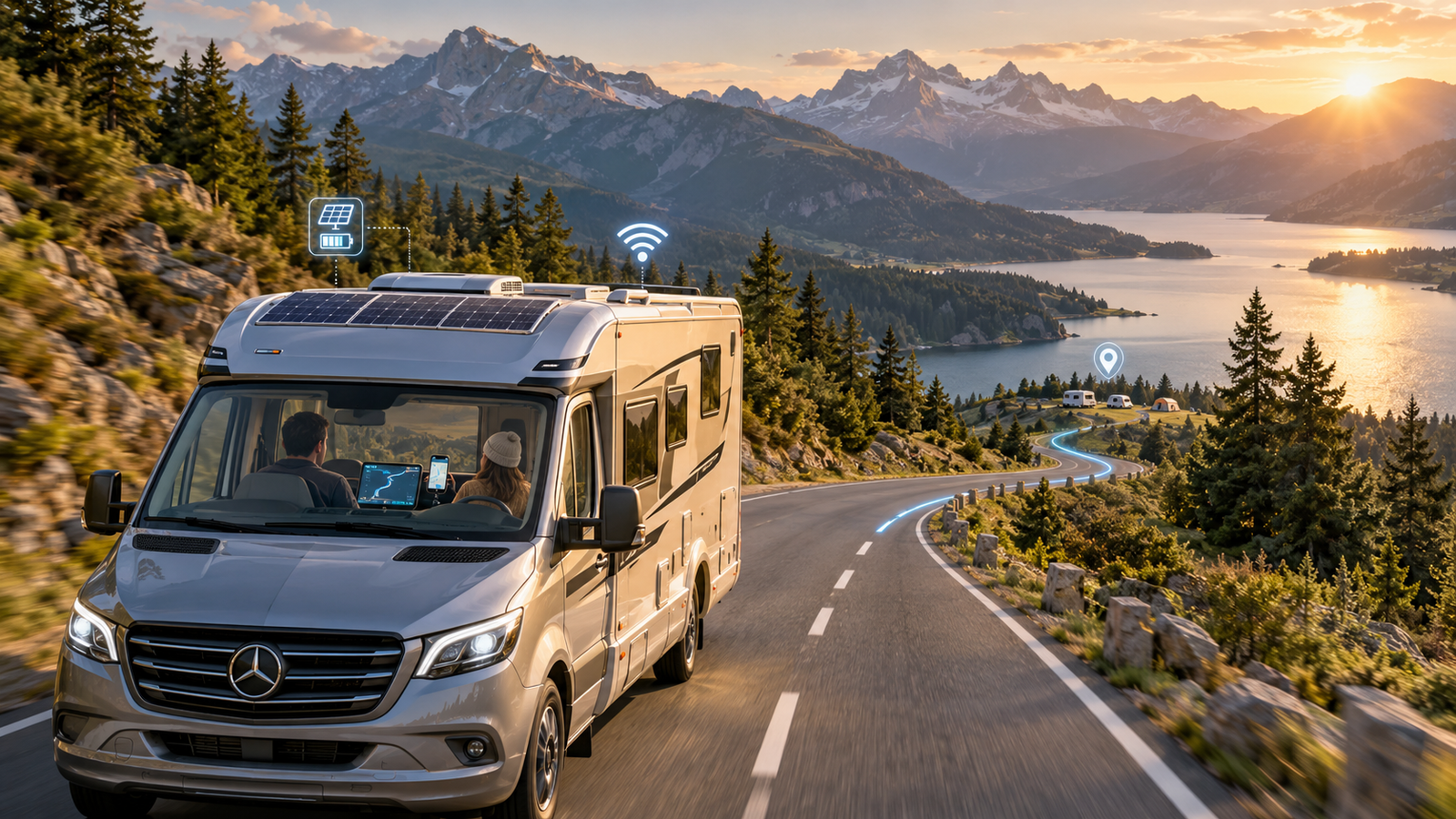
Smart Travel: How Technology Is Reshaping the Modern Road Trip
Technology tends to get associated with screens, apps, and gadgets you use while sitting still. But one of the more interesting shifts happening right now is how much tech is influencing the way people plan and experience physical travel — specifically the growing trend of road trips and motorhome-based tourism. What used to be a fairly analog, spontaneous kind of trip has quietly become one of the more tech-integrated forms of travel available today.
Table of Contents
Route Planning Has Gone Fully Digital
A decade ago, planning a multi-week road trip meant paper maps, guidebooks, and a lot of guesswork about where to stop. Now, real-time traffic data, offline-capable mapping apps, and crowdsourced campsite databases have turned route planning into something closer to a logistics exercise than a leap of faith. Apps that show live availability at campgrounds, real-time fuel prices along a route, and weather forecasting tied directly to elevation changes have made it possible to plan a week-long trip with a level of precision that simply wasn’t available before.
Off-Grid Doesn’t Mean Disconnected Anymore
One of the biggest technological shifts in this space is power management. Portable solar setups, lithium battery banks, and smart inverters have made it realistic to stay off-grid for days without sacrificing connectivity or comfort. This matters more than it might seem — modern travelers increasingly expect to charge devices, run small appliances, and stay connected even while parked somewhere with no hookups. The technology behind managing power draw efficiently in a small, mobile space is genuinely interesting from an engineering standpoint, and it’s a big part of why van life and motorhome travel have become viable long-term lifestyles rather than just weekend novelties.
Packing for that kind of trip has become its own small logistics challenge, and it’s worth noting how much of a modern packing list is now tech-driven rather than purely practical gear. A well-organized packing checklist for a one-week motorhome trip today typically includes power banks, offline map downloads, and charging accessories right alongside the traditional essentials — a small but telling sign of how travel habits have shifted.
Digital Transparency Is Changing How People Book
Another quieter shift is happening on the trust and verification side of travel. Booking a vehicle used to rely almost entirely on reputation and word of mouth. Now, digital transparency — certifications, inspection records, and documentation available online before you even make contact with a rental company — plays a much bigger role in decision-making. Travelers increasingly expect to verify a vehicle’s roadworthiness and legal standing digitally before committing to a booking, rather than finding out details only after arriving to pick it up.
This shift toward pre-verification is a good example of how digital-first expectations are spreading into industries that weren’t traditionally tech-forward. Information such as vehicle inspection and certification details before a first booking — the kind of documentation that used to be a phone-call question — is increasingly something people expect to check online first, treating it the same way they’d check reviews or specs before any other purchase.
Why This Matters Beyond Travel
The interesting part of this trend isn’t really about motorhomes specifically — it’s a case study in how digitization spreads into industries at their own pace. Fields that seem inherently physical and offline eventually adopt the same expectations of real-time data, transparency, and pre-verification that online shopping and digital services normalized years ago. Travel, and specifically self-sufficient, off-grid travel, is simply one of the more visible examples of that shift happening right now.
As power management technology keeps improving and digital verification becomes standard rather than optional, it’s likely that even more traditionally analog forms of travel will follow the same pattern — becoming more connected, more transparent, and more data-driven, without losing the appeal of being genuinely off the beaten path.
