

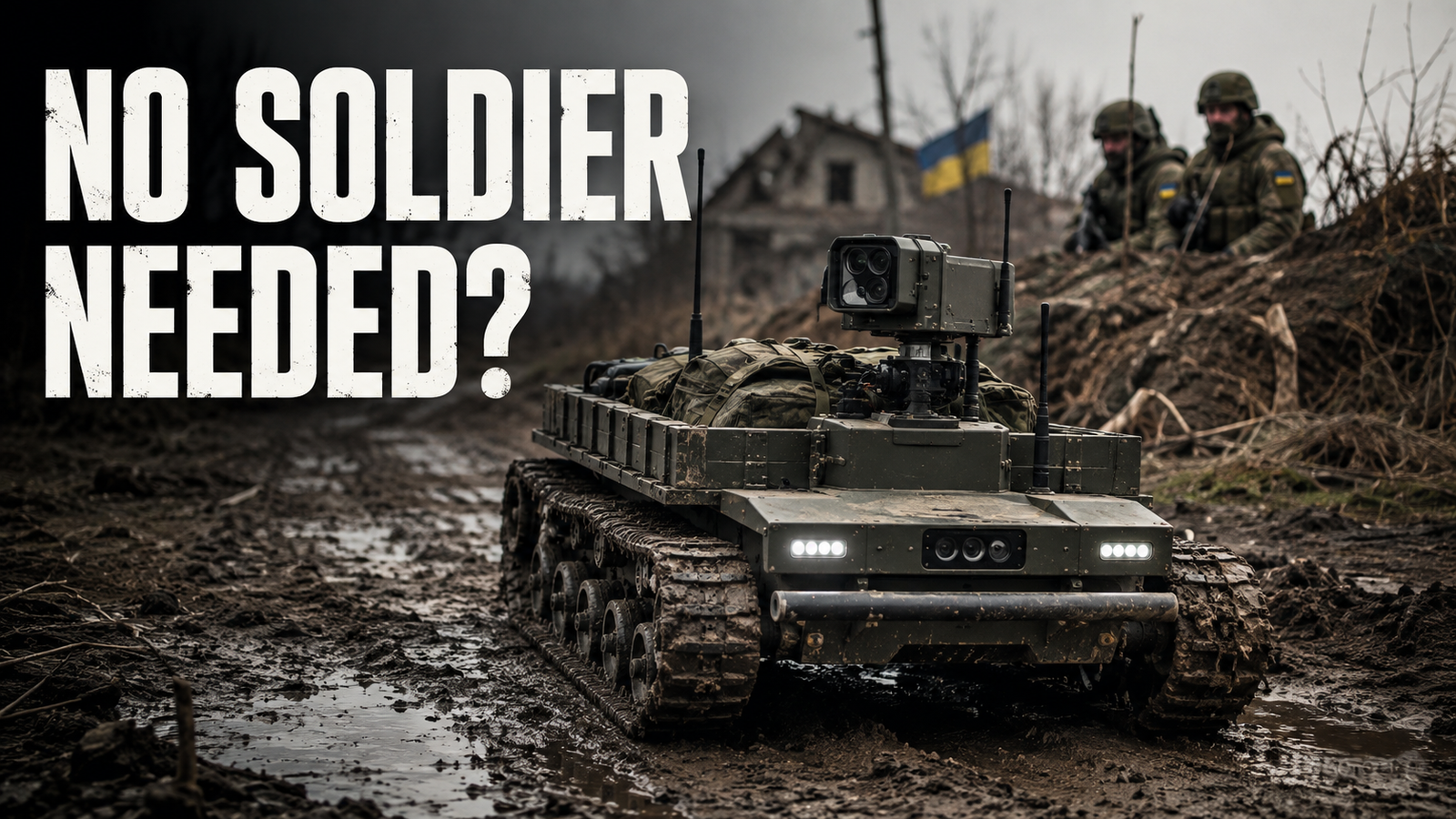
What Is a UGV?
The term UGV is now heard increasingly often in Ukraine, not only among military personnel but also in wider public discussions about modern defense technology. UGV stands for Unmanned Ground Vehicle, a category of robotic ground platforms that can operate without a person physically sitting inside the vehicle. They are also frequently described as Ground Robotic Systems (GRS).
Most modern UGVs use wheeled or tracked chassis powered by electric motors and rechargeable battery systems. Their main purpose is to carry out demanding or dangerous tasks while allowing personnel to operate from a safer location. Instead of exposing soldiers directly to hazardous battlefield conditions, operators can remotely control these platforms and use them for transportation, reconnaissance, engineering, evacuation, and other missions.
As warfare continues to evolve, UGVs are moving beyond the experimental stage. They are increasingly becoming practical battlefield tools capable of improving operational efficiency while reducing unnecessary exposure of personnel to danger.
Table of Contents
Design Features
A UGV’s design has a major influence on where it can operate and what missions it can perform effectively. Engineers therefore have to consider several factors simultaneously, including mobility, speed, carrying capacity, endurance, reliability, and the conditions in which the platform will be deployed.
Modularity is particularly important in modern ground robotic systems. Rather than designing a completely different vehicle for every mission, manufacturers can develop platforms that support interchangeable equipment and payloads. This makes it possible to configure the same basic system for logistics, reconnaissance, evacuation, engineering, or other specialized roles.
Another important consideration is the platform’s mobility system. Wheeled and tracked configurations each offer different advantages, and selecting the appropriate design depends heavily on terrain, payload requirements, speed, and operational conditions.
Wheeled UGVs
Wheeled UGVs are generally optimized for speed, maneuverability, and efficient movement across comparatively firm surfaces. Roads, urban environments, industrial areas, and relatively even terrain are particularly suitable for these platforms, although properly designed wheeled systems can also handle certain off-road conditions.
One of their strongest advantages is efficiency. Wheels typically create less rolling resistance than tracks, allowing the vehicle to consume less energy during movement. This can contribute to longer operating periods between battery charges.
Wheeled platforms also tend to have simpler mechanical systems, which can make maintenance and transportation easier. Their combination of speed and responsive handling makes them particularly useful for missions where rapid movement and maneuverability are more important than maximum cross-country capability.
Tracked UGVs
When difficult terrain becomes the primary challenge, tracked UGVs offer significant advantages. Their design allows them to move across surfaces such as mud, loose soil, sand, snow, debris, damaged roads, and uneven landscapes where conventional wheels may struggle to maintain traction.
Tracks spread the platform’s weight across a larger contact area, helping improve stability and mobility on soft or irregular surfaces. This configuration can also support heavier loads, making tracked systems suitable for missions that require substantial payload capacity.
For these reasons, tracked UGVs are frequently associated with demanding roles such as transporting supplies, supporting engineering operations, evacuating casualties, and operating in heavily damaged or contested environments.
Logistics
Keeping front-line units supplied is essential to maintaining their ability to operate. Ammunition, drinking water, food, medical materials, batteries, technical equipment, and other supplies may need to be transported through areas exposed to hostile activity or difficult environmental conditions.
UGVs can reduce the amount of direct human exposure required during these transportation missions. A robotic platform can carry supplies toward forward positions while being controlled from a safer distance, helping units maintain access to essential resources without assigning personnel to every stage of the delivery process.
This capability becomes especially valuable when conventional transportation is complicated by damaged infrastructure, poor terrain, severe weather, or battlefield threats.
Casualty Evacuation
Removing wounded personnel from dangerous areas is both time-sensitive and extremely hazardous. Traditional evacuation can require medics or other soldiers to enter exposed locations, potentially placing additional people at risk.
Ground robotic platforms provide another option. A suitably equipped UGV can be used to transport an injured person away from a hazardous area while the vehicle is controlled remotely or operates with limited autonomous assistance.
Stability and terrain capability are particularly important for this application because an evacuation platform must transport a casualty safely while crossing uneven or damaged ground. By reducing the need for additional personnel to enter exposed locations, robotic evacuation systems can help lower the risks associated with casualty recovery.
Mining and Demining
Operations involving mines and explosive hazards naturally involve substantial danger. Using remotely operated robotic platforms allows some engineering activities to be performed while keeping personnel farther away from potentially hazardous areas.
Depending on their configuration, UGVs may carry specialized cameras, sensors, manipulators, or other engineering equipment. These systems can help operators inspect suspicious areas, identify hazards, and conduct certain engineering or demining activities remotely.
The ability to configure robotic platforms for specific engineering tasks also means they can be adapted to different terrain and operational requirements without unnecessarily exposing personnel to dangerous environments.
Reconnaissance and Combat Operations
UGVs can also serve as mobile platforms for collecting information about the battlefield. Cameras, thermal imaging equipment, acoustic sensors, communication systems, and other observation technologies can be integrated into the vehicle according to mission requirements.
This allows a robotic platform to observe areas that may be difficult or dangerous for personnel to approach directly. Information gathered by onboard systems can then be transmitted to operators or commanders, providing a clearer understanding of conditions in the surrounding area.
Depending on its equipment and configuration, the same platform may support reconnaissance, surveillance, or broader battlefield operations. Access to timely information can improve situational awareness and help commanders make decisions based on a more detailed picture of the operational environment.
Conclusion
UGVs are becoming an increasingly important part of modern military operations. Their value lies not in replacing personnel entirely, but in transferring selected dangerous, physically demanding, or repetitive tasks to remotely operated robotic platforms.
From delivering essential supplies and supporting casualty evacuation to engineering work and reconnaissance, ground robotic systems can be configured for a wide variety of battlefield requirements. Their modular nature also enables military units to adapt platforms as operational needs change.
For organizations considering robotic ground systems, selecting the appropriate platform, configuration, and manufacturer is an important part of the process. For units looking to buy UGV, factors such as reliability, maintainability, mission compatibility, and long-term technical support should therefore be considered alongside the platform’s basic specifications.
Nebokray Ukraine focuses on the serial production and continued development of UGV platforms intended for the operational needs of Ukraine’s Defense Forces. In addition to manufacturing robotic systems, the company provides after-sales services covering maintenance, repair, modernization, and restoration of operational capability. Its UGV platforms are supplied with a 12-month manufacturer’s warranty.
