

Comparing Non-Ferrous Metal Prices for Business
For manufacturers, auto dismantlers, cable processors, maintenance firms, and scrap dealers, comparing non-ferrous metal prices sounds straightforward on paper: check the market, request a few quotes, and sell to the highest bidder. In practice, however, the process is far more nuanced. A price list alone rarely tells the full story, and businesses that compare offers without understanding grading, recovery value, logistics, and payment terms can leave significant money on the table.
If your company regularly handles copper, aluminium, brass, lead, zinc, or mixed non-ferrous materials, knowing how buyers evaluate scrap can help you negotiate from a stronger position, improve internal sorting, and build more profitable recycling relationships. That is especially important in a market where price fluctuations, contamination, and inconsistent assessment methods can dramatically affect the final payout.
Table of Contents
Why headline prices can be misleading
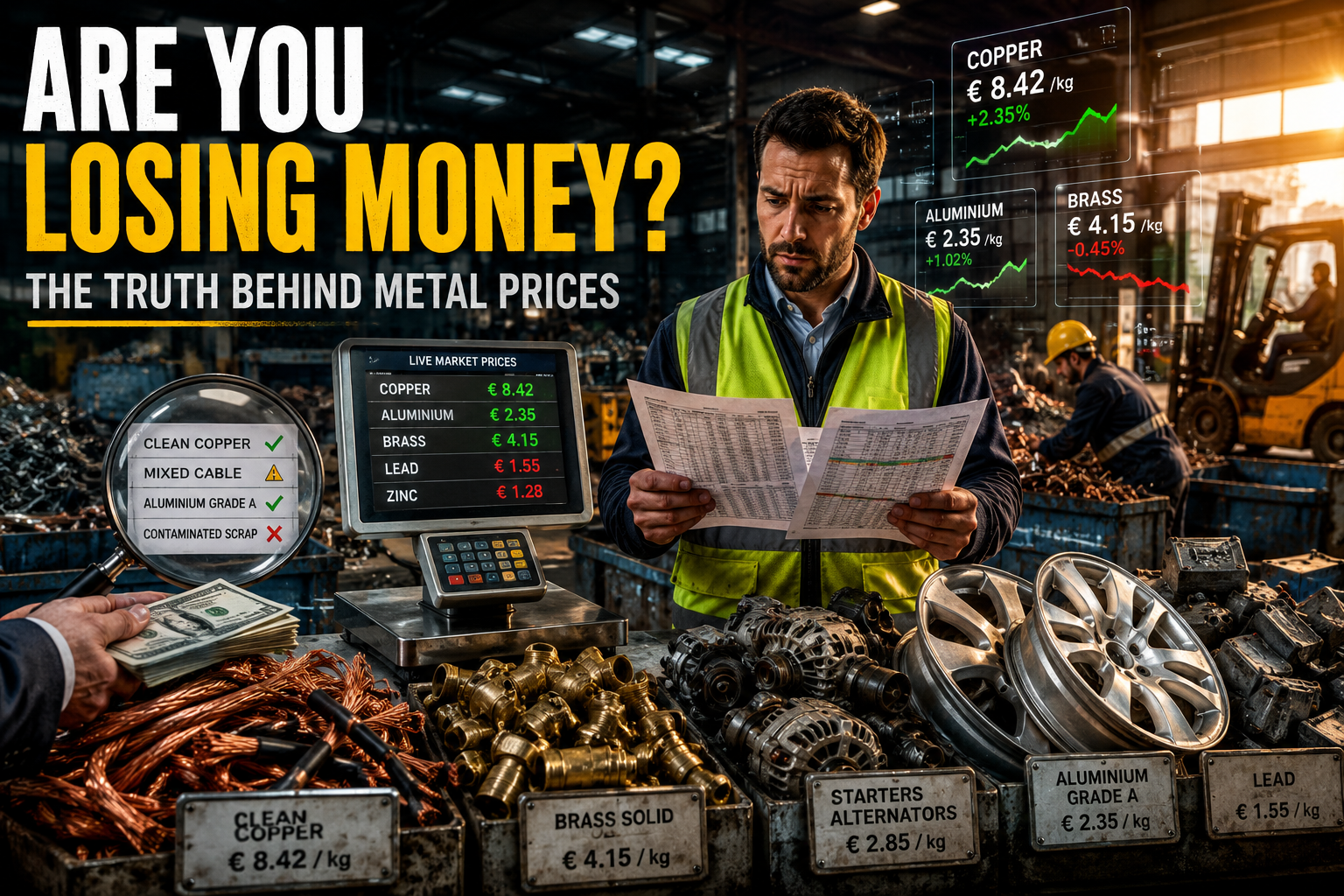
One of the most common mistakes businesses make is focusing only on the advertised scrap metal prices (metāllūžņu cenas). While posted rates may look attractive, they often reflect ideal conditions: clean, well-sorted, high-volume material with minimal contamination. If your load includes mixed alloys, attachments, insulation, oil residue, steel inserts, or moisture, the actual settlement may differ from the initial quote.
That is why a professional comparison should start with context. Ask what material grade the quoted price refers to, whether deductions apply, and how the buyer evaluates purity. For example, bare bright copper will command a very different rate than mixed cables, and clean aluminium rims are not valued the same way as contaminated cast aluminium.
In other words, businesses should compare not just the number on the sheet, but the methodology behind it.
Understand material grading before requesting quotes
Grading is one of the biggest drivers of value in the non-ferrous recycling sector. Two loads that look similar at first glance may be priced very differently after inspection. This is why internal sorting procedures matter so much.
Before contacting a recycler, it helps to separate material into clear categories such as:
- Copper cables vs. mixed insulated wire
- Clean aluminium vs. painted or contaminated aluminium
- Brass solids vs. mixed brass components
- Starters and alternators vs. general mixed metal assemblies
- Lead-bearing scrap vs. mixed heavy metals
When your team sorts carefully, you reduce the risk of downgrades and make it easier for the buyer to provide an accurate assessment. This also speeds up transactions, which matters for businesses that move material regularly and want predictable cash flow.
Experienced recyclers typically use databases, technical knowledge, and hands-on inspection to determine true value. Companies such as Metalbee, which works with non-ferrous metals in Latvia, stand out because they focus on transparent evaluations and efficient settlements rather than generic one-size-fits-all pricing. For businesses, that kind of expertise can make comparisons far more meaningful.
Volume matters more than many sellers realize
Another factor that affects pricing is volume. A buyer may offer stronger terms for larger, consistent deliveries because processing becomes more efficient and logistics costs can be spread across more material. That means a one-off small load may receive a different rate than regular industrial quantities, even when the material type is the same.
If your business generates scrap continuously, it is worth discussing long-term arrangements rather than treating every sale as a separate transaction. Reliable supply often creates room for better pricing, smoother pickups, and faster administrative handling. In a competitive environment, relationship value can be just as important as market value.
Businesses that want a more realistic view of non-ferrous metal prices (krāsaino metālu cenas) should therefore compare offers based on actual volumes, collection frequency, and material consistency, not only spot quotes.
Watch for hidden costs in logistics and processing
Transport, handling, unloading, and processing costs can all influence the real return from a sale. A quote that appears higher at first may become less attractive once extra deductions are applied. This is especially true for bulky loads, mixed automotive scrap, or materials that require additional dismantling.
When comparing buyers, ask questions such as:
- Is collection included or charged separately?
- Are there minimum volume requirements?
- Will mixed loads be sorted on-site or downgraded?
- Are there processing deductions for contamination or attachments?
- How quickly is weighing and settlement completed?
Fast, transparent handling has real business value. Delays in unloading or payment can create avoidable bottlenecks, particularly for companies that rely on steady warehouse turnover. A buyer that offers slightly lower posted rates but more efficient service may still produce a better overall outcome for your operation.
The importance of transparency and documentation
For business sellers, trust should never be treated as a soft factor. It is central to margin protection. Clear documentation, transparent weighing procedures, and well-explained grading decisions reduce disputes and help finance teams reconcile transactions quickly.
This is one reason many businesses prefer working with established partners that emphasize quality standards and consistent communication. Metalbee, for example, positions itself around secure and reliable transactions, backed by professional evaluation processes and a sustainability-focused approach. For companies that care about both profitability and responsible recycling, that combination is increasingly relevant.
In many sectors, environmental expectations are also rising. Customers, auditors, and partners want to know where secondary materials go and whether they are processed responsibly. Choosing a recycler that takes environmental performance seriously is not only good practice; it can support your own brand credibility.
Market timing matters, but operational readiness matters more
Yes, global commodity markets influence scrap values. Copper, aluminium, and nickel prices can move quickly due to manufacturing demand, energy costs, geopolitical risk, and supply chain shifts. But even when markets rise, businesses do not automatically capture top value if their material is poorly sorted or sold without preparation.
A more effective strategy is to build an internal system that supports better selling decisions year-round. That can include:
- Training staff to identify major non-ferrous categories
- Storing high-value metals separately
- Keeping materials dry and free from unnecessary contamination
- Tracking historical sale prices by material type
- Reviewing multiple buyer offers using the same load description
These steps help create apples-to-apples comparisons. Without them, two quotes may differ simply because the buyers are pricing different assumptions.
How to evaluate a recycling partner, not just a price
When comparing buyers, think beyond the transaction and look at the broader partnership. A strong recycling partner should offer more than a number. They should help your business simplify disposal, improve recovery, and reduce uncertainty.
Here are a few indicators worth prioritizing:
1. Technical expertise
Buyers with real material knowledge are more likely to assess mixed or complex loads accurately. This is especially useful for automotive components, cable scrap, and industrial offcuts.
2. Consistent communication
Prompt replies, clear explanations, and straightforward paperwork save time for procurement, operations, and finance teams.
3. Fair and transparent valuation
Reliable recyclers explain how prices are calculated and what factors may affect the final settlement.
4. Speed of payment
Cash flow matters. Fast settlement can be a major advantage for businesses managing regular scrap streams.
5. Sustainability focus
Environmentally conscious recycling supports compliance goals and demonstrates responsible resource management.
If you are reviewing current scrap metal prices (metāllūžņu cenas) and planning your next sale, it is worth choosing a partner that combines market awareness with transparent service. That is where a specialist such as Metalbee can add practical value for businesses in Latvia handling non-ferrous materials, from car cables and alternators to aluminium rims and other recyclable metal streams.
Final takeaway for businesses
The best price is not always the highest advertised price. It is the offer that delivers the strongest overall return after grading accuracy, contamination risk, logistics, payment speed, and service quality are all considered. Businesses that understand these variables are far better positioned to compare buyers confidently and maximize the value of their recyclable materials.
For companies looking to improve their process, a simple next step is to gather a detailed inventory of your non-ferrous scrap, sort it more precisely, and request a transparent evaluation from an experienced buyer. If you want a practical reference point, Metalbee is a useful resource for businesses in Latvia seeking professional support with non-ferrous metal purchasing and responsible recycling.
