

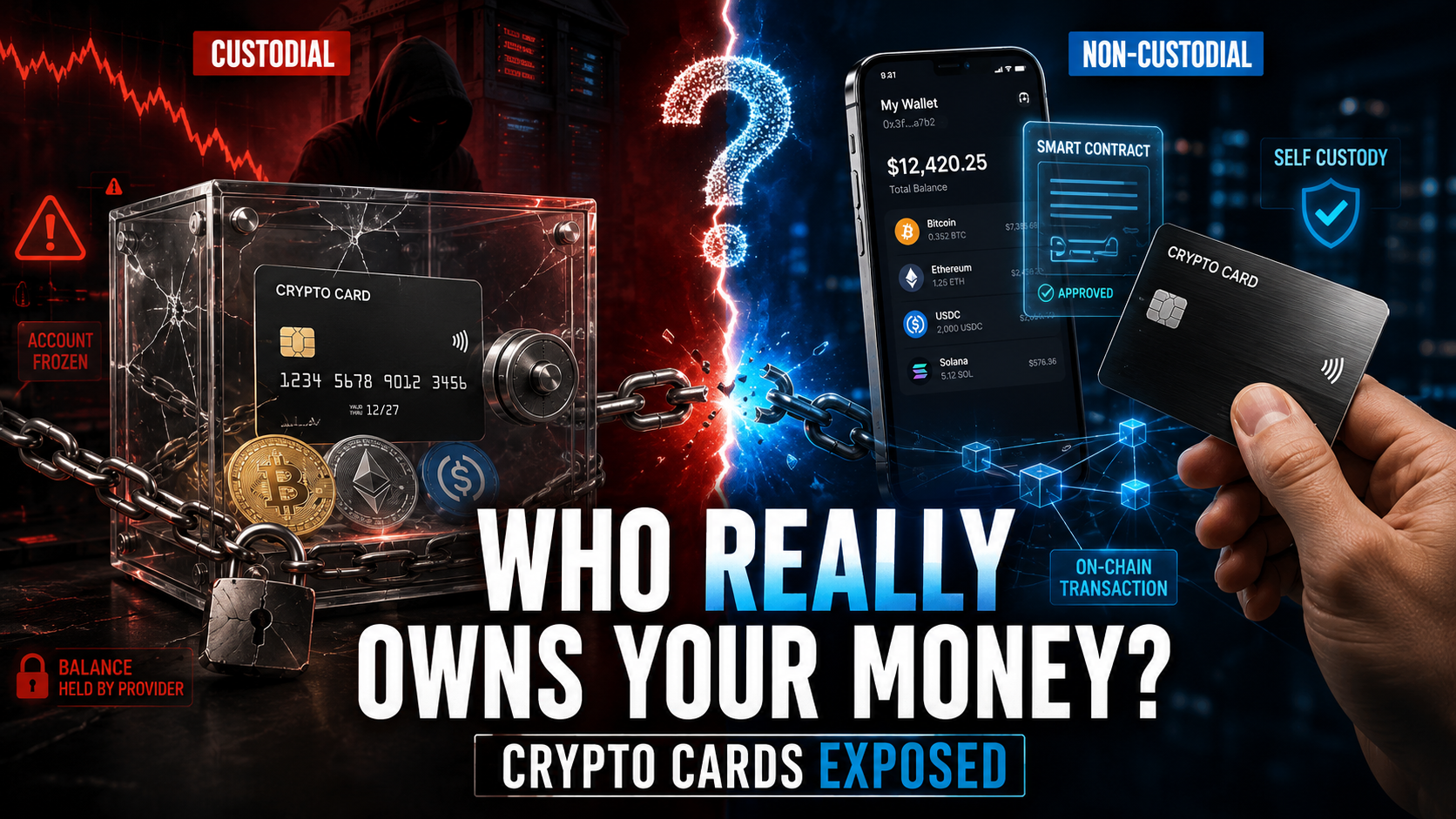
For years, using a crypto card meant handing your funds to a provider that converted and held them for you. A newer generation of non-custodial cards changes that, letting you spend directly from a wallet you control. It is one of the more meaningful shifts in the category, and a spec-level comparison like nomadcrypto.cards helps separate genuine non-custodial products from marketing that borrows the term.
The defining feature is simple: the provider never holds your balance. Instead, a smart-contract wallet authorizes each card payment on-chain and releases only the amount needed, at the moment of purchase. Your funds stay under your control until you actually spend them, which aligns the card with crypto’s original self-custody ethos and means a company failure does not freeze your money.
The main advantage is reduced counterparty risk. Because there is no custodial balance sitting in the provider’s systems, a breach or insolvency at the provider does not directly expose your funds. Given how many custodial card programs have closed over the years, this is a real, not theoretical, benefit, and it is the clearest reason the model has gained traction.
The trade-offs are practical. Non-custodial cards rely on on-chain authorization, which introduces engineering challenges around speed and failed transactions that well-designed cards hide but cannot fully erase. Coverage, spending limits, and supported regions also tend to lag the established custodial players, simply because the model is newer and still maturing.
Responsibility shifts to the user, too. With self-custody, key management becomes your security boundary. That suits users comfortable running a wallet but adds friction for those who just want a simple card experience, and losing access to the wallet means losing access to the funds.
Fees still follow the same logic as any crypto card. Spending involves converting to fiat, and the conversion spread remains the dominant cost, so a low spread matters more than a flashy reward regardless of the custody model.
It is worth verifying the claim rather than trusting the label, because some products described as non-custodial still route funds through a provider-controlled wallet for a moment during settlement. A genuinely non-custodial design gives you a clear on-chain view of where your funds sit and when they move, and that transparency is part of what you are paying for with the added responsibility.
Non-custodial cards are not automatically the right choice for everyone, but for users who prioritise control and want to minimise reliance on a single provider, they are a genuine step forward. Comparing them against custodial options on custody, coverage, limits, and fees, rather than on the buzzword alone, is how to tell whether one actually fits how you want to spend.
