

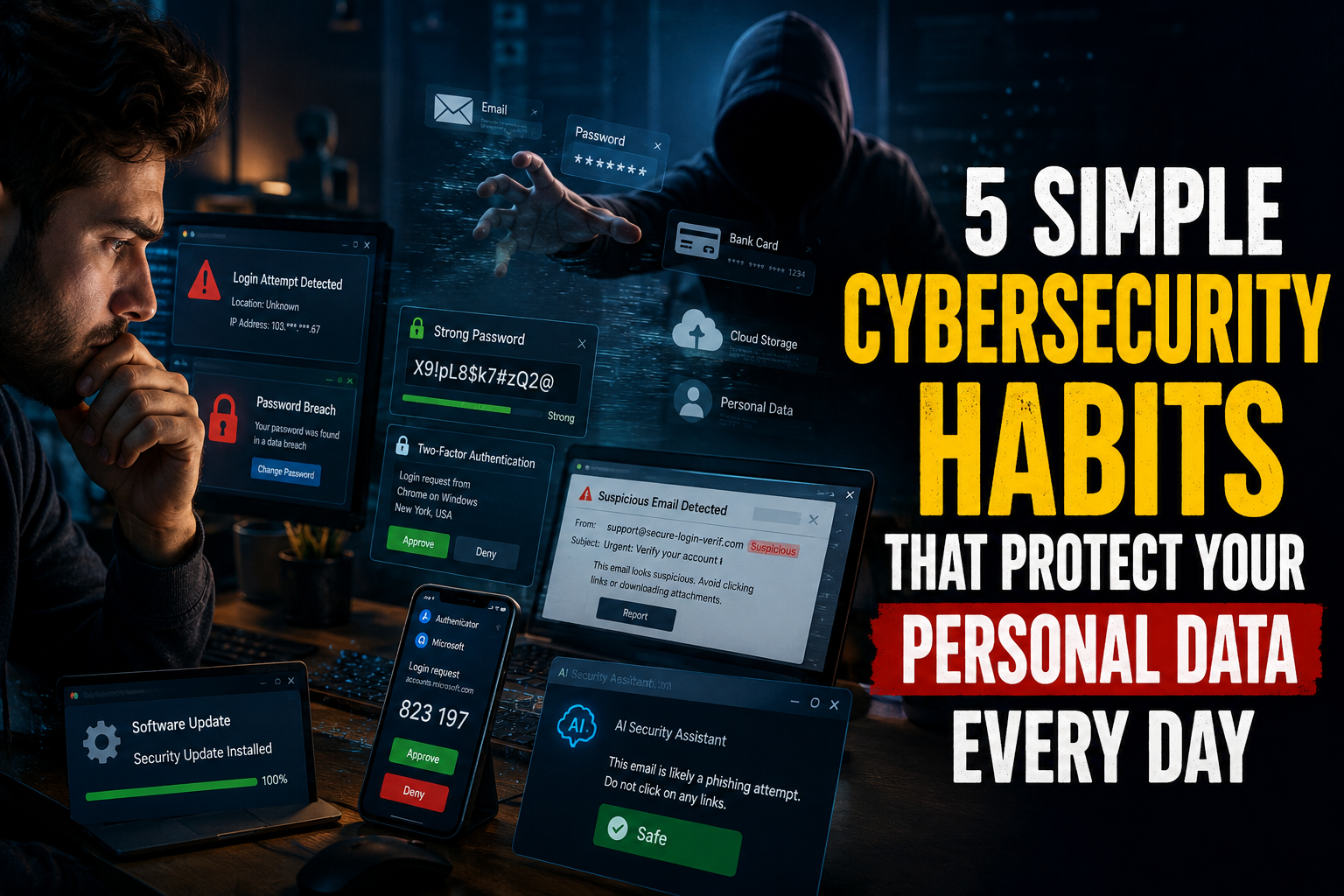
Every day, millions of people use online banking, social media, cloud storage, and digital payment services without realizing how frequently cybercriminals attempt to steal personal information. While large-scale data breaches often make headlines, many successful attacks happen because users unknowingly make small security mistakes. Fortunately, protecting yourself online doesn’t require advanced technical knowledge. Developing a few simple habits can dramatically reduce the chances of becoming a victim of cybercrime.
Cybersecurity experts agree that the majority of attacks are preventable. Instead of relying solely on antivirus software, users should combine good security practices with modern technology. The following recommendations are easy to implement and can significantly improve your digital safety.
Table of Contents
1. Create Strong and Unique Passwords
Password reuse remains one of the most common security mistakes. Many people use the same password for multiple websites because it is easier to remember. Unfortunately, if just one website suffers a data breach, attackers often try the stolen credentials on email accounts, online stores, banking platforms, and social media services.
A password manager is one of the easiest solutions. It can generate long, random passwords for every account while securely storing them in an encrypted vault. This eliminates the need to memorize dozens of complex passwords and greatly reduces the risk of credential stuffing attacks.
2. Enable Multi-Factor Authentication
Even the strongest password can eventually be compromised through phishing or malware. Multi-factor authentication (MFA) provides an additional layer of protection by requiring another verification method, such as a mobile authentication app, hardware security key, or biometric verification.
Today, most major online services—including Google, Microsoft, Apple, GitHub, and many banking platforms—support MFA. Enabling this feature takes only a few minutes but can stop unauthorized access even if your password is exposed.
3. Keep Software Up to Date
Software developers regularly release security updates that fix newly discovered vulnerabilities. Delaying updates gives attackers more opportunities to exploit known weaknesses. This applies not only to operating systems but also to browsers, office applications, PDF readers, plugins, and mobile apps.
Automatic updates are usually the safest option for most users. Businesses should also establish a patch management process to ensure that all workstations and servers receive security fixes promptly.
4. Think Before You Click
Phishing remains one of the most effective cyberattack techniques because it targets human behavior instead of software vulnerabilities. Attackers create convincing emails that appear to come from banks, delivery companies, streaming services, or trusted colleagues. Their goal is to trick users into revealing passwords or downloading malicious files.
Before clicking any link, verify the sender’s email address, carefully inspect the website URL, and avoid opening unexpected attachments. If a message creates urgency or asks for confidential information, it deserves additional scrutiny.
Users who want to learn more about protecting their online accounts can explore this comprehensive guide to Internet Security, which covers phishing, malware, password protection, and safe browsing practices in greater detail.
5. Use Artificial Intelligence Wisely
Artificial intelligence is changing cybersecurity for both defenders and attackers. Security professionals use AI to analyze suspicious activity, detect malware, and identify unusual login attempts much faster than traditional methods. At the same time, cybercriminals are increasingly using AI to generate realistic phishing emails, fake websites, and convincing social engineering messages.
Users can also benefit from AI by asking intelligent assistants to explain suspicious emails, summarize security alerts, or provide recommendations for improving online safety. However, AI-generated content should always be reviewed critically, especially when dealing with financial or sensitive information.
Businesses and technology enthusiasts interested in the latest AI developments can read more about OpenAI and its growing role in cybersecurity, productivity, and digital transformation.
Cybersecurity Is a Daily Habit
Many people believe cybersecurity requires expensive software or expert knowledge, but that is rarely the case. Consistently following basic security practices provides far greater protection than relying on a single security product. Strong passwords, multi-factor authentication, regular software updates, cautious browsing habits, and responsible use of AI technologies create multiple layers of defense against common online threats.
As cybercriminals continue to develop new attack methods, staying informed becomes just as important as using the right security tools. Even small improvements in everyday digital habits can significantly reduce the likelihood of identity theft, financial fraud, or data loss.
Conclusion
Cybersecurity is no longer only an IT department’s responsibility. Every internet user plays a role in protecting personal information and digital assets. By following these five simple habits, individuals and businesses can strengthen their defenses against phishing, malware, credential theft, and other online threats. Building good security habits today is one of the smartest investments you can make for your digital future.
