

How Copper Content Determines Scrap Recycling Value
Copper scrap can look deceptively simple. A box of old cables, a stack of electrical busbars, and several lengths of plumbing tube may all contain the same base metal, yet they can receive noticeably different purchase offers. The reason is that recyclers are not valuing appearance or weight alone. They are estimating how much recoverable copper a load contains, how clean that copper is, and how much work is required to prepare it for refining.
Understanding these factors helps electricians, demolition contractors, manufacturers, automotive businesses, and private sellers make better decisions. By identifying materials correctly, separating grades, and presenting scrap safely, sellers can reduce processing uncertainty and obtain a more accurate valuation.
Table of Contents
Copper Content Is the Starting Point, Not the Entire Calculation
A scrap buyer begins by considering gross weight, but the important figure is recoverable metal weight. A 100-kilogram load of insulated cable is not equivalent to 100 kilograms of copper. Its total weight may include plastic insulation, plugs, steel armoring, moisture, dirt, and other materials that do not contribute to the copper yield.
A simplified valuation model looks like this:
- Gross load weight: The total weight delivered or collected.
- Estimated copper percentage: The proportion expected to be recoverable.
- Material quality: The purity and condition of the recovered copper.
- Processing requirement: The labor, equipment, and energy needed for separation.
- Market and refining factors: Current demand, refinery terms, logistics, and handling costs.
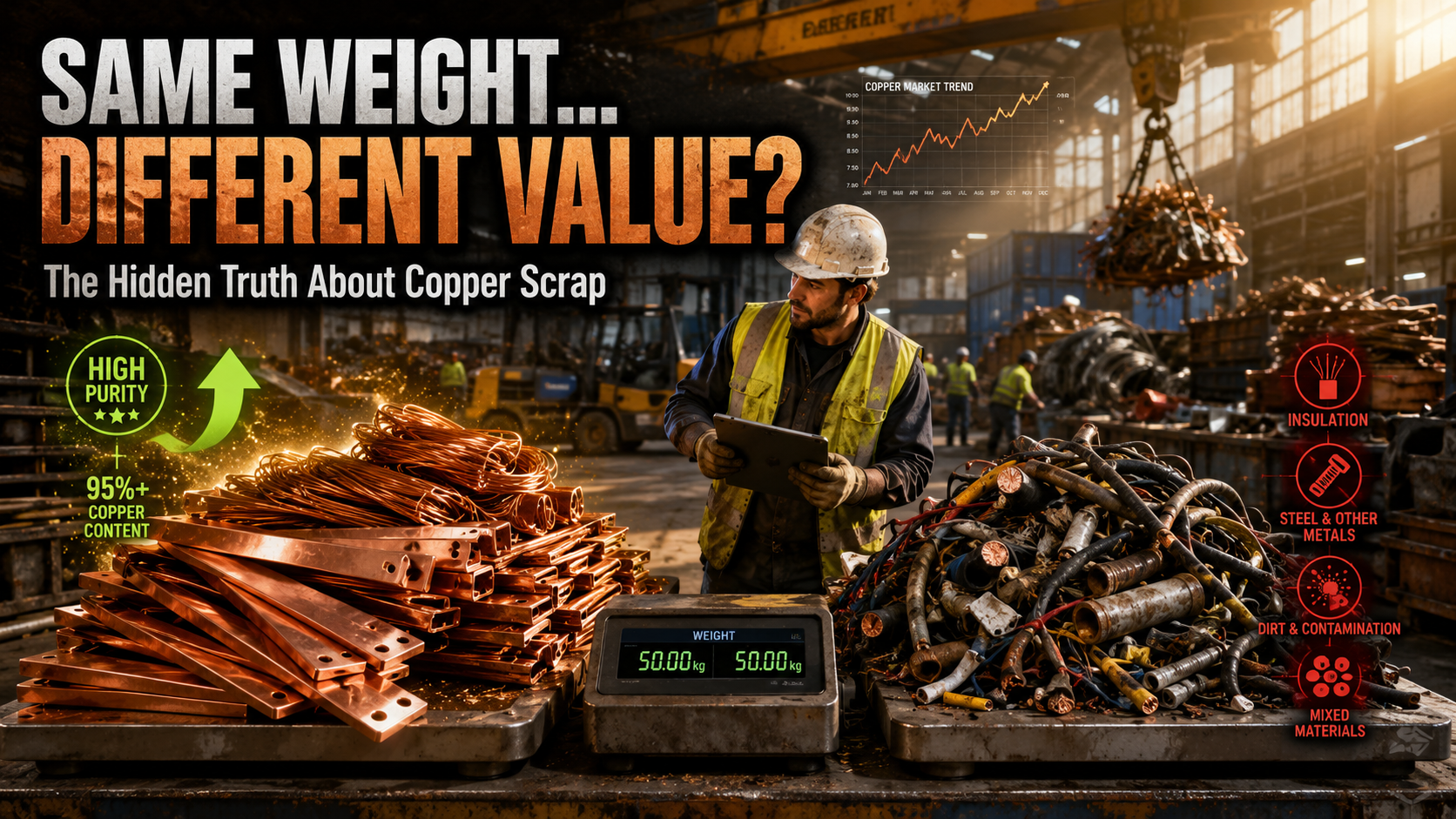
For example, a clean 50-kilogram busbar lot may contain nearly all copper, while a 50-kilogram mixed-cable lot could include a substantial amount of insulation and attachments. Even if both loads occupy similar storage space, their recycling economics are very different.
Why Clean Busbars Often Command Strong Value
Busbars are designed to distribute electricity efficiently in switchgear, control panels, substations, and industrial installations. They are commonly made from high-conductivity copper and often appear as thick, flat strips. When removed cleanly, without steel bolts, plastic mounts, excessive solder, or other attachments, busbars can represent a high-yield recycling material.
Their advantage is not simply thickness. Their composition is usually easy to identify, and relatively little non-metallic material needs to be removed. This lowers uncertainty for the buyer and can reduce downstream processing. However, plated surfaces, brazed joints, attached components, or mixed copper-and-aluminum assemblies may change the classification. Sellers should therefore avoid assuming that every reddish metal bar belongs in the highest grade.
Cables Can Be Valuable, but Recovery Rates Vary Widely
Cable is one of the most diverse copper-bearing scrap categories. At one end are thick, single-core power cables with a high metal-to-insulation ratio. At the other are communication wires, fine harnesses, extension leads, and heavily armored cables containing far less copper by total weight.
Several characteristics influence cable value:
- Conductor thickness: Thick conductors generally produce a higher copper yield than fine wires.
- Insulation type: Heavy plastic or rubber coverings reduce recoverable metal content per kilogram.
- Armoring and shielding: Steel, aluminum, or composite layers require additional separation.
- Connectors and terminals: Plugs, housings, and attached devices add non-copper weight.
- Contamination: Oil, mud, moisture, and construction debris can affect acceptance and grading.
This explains why quotations based only on a photograph or a general label such as “copper cable” can be provisional. A representative sample, clear description, and verified weight enable a more dependable assessment.
Market Price and Scrap Payment Are Not the Same
People often compare a scrap offer directly with a published commodity-market figure. That comparison can be misleading because an exchange quotation generally represents standardized refined copper, not a mixed scrap load awaiting sorting and processing.
The current copper price (kuparin hinta) is still an important reference, but a recycler must also account for actual copper recovery, grade, analysis, preparation, transportation, and refinery conditions. Consequently, two loads with the same gross weight can produce different net offers even on the same day.
Similarly, the copper price per kilogram (kuparin kilohinta) should not be treated as a universal rate for every copper-bearing object. The relevant rate depends on whether the material is clean copper, insulated cable, coated metal, mixed scrap, or a component requiring further dismantling.
Sorting Is One of the Simplest Ways to Protect Value
Mixed loads create uncertainty. If clean copper tube is combined with brass fittings, insulated wire, aluminum conductors, and steel fasteners, the buyer must either spend more time sorting the material or value the entire batch conservatively. Separating obvious grades before delivery can make inspection faster and pricing more transparent.
A practical sorting workflow
- Separate by material type. Keep busbars, bare wire, insulated cable, copper tube, and mixed components in different containers.
- Remove easy attachments. Detach steel brackets, plastic housings, and large connectors when this can be done safely and efficiently.
- Keep material dry. Store scrap under cover and prevent water, soil, or oil from increasing the load weight.
- Label containers. Record the source, approximate weight, and suspected grade, especially when managing recurring industrial waste.
- Document the load. Clear photographs and accurate descriptions help the recycler prepare for collection and assessment.
Preparation should always remain proportionate. Spending hours stripping a small quantity of fine cable may not create enough additional value to justify the labor. Burning insulation is unsafe, environmentally harmful, and unacceptable. Professional mechanical processing is generally the better route for cables that cannot be stripped efficiently.
Accurate Identification Matters When Materials Look Similar
Not every copper-colored item is pure copper. Brass, bronze, copper-plated steel, and certain electrical alloys may resemble copper at a glance. Coatings, oxidation, grease, and industrial residue can make visual identification even less reliable.
Basic checks can help: a magnet may reveal steel beneath copper plating, while a clean cut can expose the material below the surface. Nevertheless, sellers should avoid destructive testing that creates hazards or damages reusable components. For significant, unusual, or mixed industrial lots, professional evaluation is more dependable than guesswork.
This is where an experienced recycling partner adds practical value. Metalaxis purchases and evaluates non-ferrous metals across Finland, serving businesses and individuals with an emphasis on secure transactions, competitive assessment, and responsible material recovery. Its wider expertise in analytical evaluation and cooperation with established refining partners supports a disciplined approach to identifying valuable metal streams rather than relying on assumptions alone.
Businesses Benefit from Treating Copper Scrap as an Inventory Stream
For companies, copper scrap should not be handled as an afterthought. Electrical contractors, panel builders, factories, data centers, vehicle workshops, and demolition firms may generate repeatable grades over time. A simple internal process can improve both financial control and environmental reporting.
Designate containers for common grades, prevent employees from mixing ferrous and non-ferrous materials, record outgoing weights, and review settlement documents. Businesses with regular volumes can also establish collection intervals that balance storage limitations with transport efficiency. This creates a traceable routine and reduces the risk of valuable material disappearing into general waste.
Before sending the next load, photograph representative pieces, estimate each category separately, and ask Metalaxis how the material should be prepared. A short conversation before collection or delivery can prevent avoidable sorting, clarify expectations, and support a faster transaction.
Better Recycling Starts with Better Information
From fine cable to heavy busbar, copper-bearing scrap has value because the metal can be recovered and returned to productive use. Yet gross weight alone never tells the full story. Copper percentage, purity, attachments, contamination, processing effort, and market conditions all shape the final result.
Sellers who separate grades, keep materials clean, provide accurate information, and work with a professional buyer are better positioned to receive a transparent assessment. Just as importantly, responsible recycling keeps useful metal in circulation and reduces the need to treat valuable industrial resources as waste. The most profitable load is often not the largest one, but the one whose contents are clearly identified and ready for efficient recovery.
