

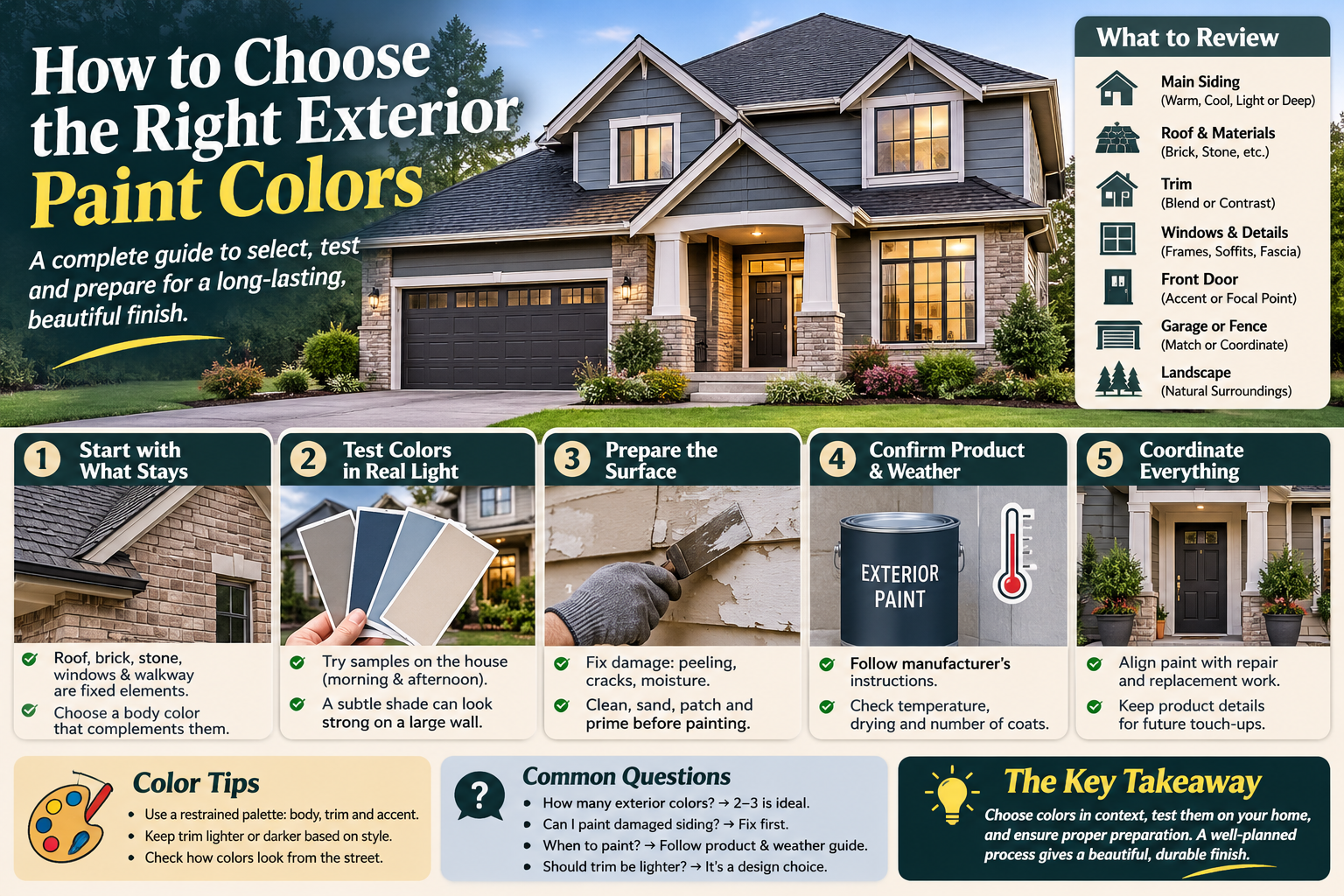
Choose exterior paint colors by comparing them with the roof, siding, masonry, windows, and landscape, then test real samples on the house in outdoor light. Before painting, identify repairs and confirm that the surface and weather conditions suit the selected product. A color preview can narrow options, but preparation and product instructions determine whether the finish is appropriate.
Table of Contents
Start with the materials that will stay
List the exterior features that are not changing: roof, brick, stone, windows, walkway, and major landscape elements. Choose a main body color that relates to those features, then select trim and accent colors. A restrained palette often makes it easier to coordinate multiple elevations, doors, and exterior structures.
Look at the home from the street and from close range. A color that appears subtle on a small sample may look stronger across a large wall. Test paint on several sides of the house because shade and direct sun can change its appearance throughout the day.
| Surface | Color decision | What to review |
| Main siding | Warm, cool, light, or deep body color | Relationship to roof and permanent materials |
| Trim | Blend with siding or define edges | Window frames, corners, soffits, and fascia |
| Front door | Accent or quiet focal point | Visibility from the street and nearby colors |
| Garage or fence | Match or coordinate with the house | Material, finish, sun exposure, and maintenance |
Preparation comes before color
Paint should not be used to hide damaged or wet material. Before work begins, identify peeling coatings, loose material, open joints, stains, and areas that may have moisture or rot. The cause of recurring damage should be addressed before a new coating is applied.
Ask the painting contractor what preparation is included: cleaning, scraping, sanding, patching, priming, caulking, masking, and protection of nearby surfaces. The right preparation depends on the substrate and its condition. A written scope helps clarify what will be repaired and what will receive paint only.
Confirm product and weather requirements
Exterior coatings have product-specific instructions for surface preparation, application, drying, and curing. Ask the contractor how the plan accounts for the manufacturer’s conditions and the home’s exposure. Rain, dew, temperature, shade, and direct sun can affect scheduling and finish quality.
Confirm the number of coats, product line, sheen, colors, and surfaces included. If wood surfaces are to be stained rather than painted, ask how the finish should be maintained and whether the current coating must be removed or prepared in a particular way.
Make the final choice with samples
Test a small set of color samples in the actual location. View them in morning and afternoon light, beside trim and permanent materials. Record the product name and finish for each approved color; do not rely on a screen image or verbal description alone.
For homeowners planning exterior color updates in Kent, Seattle, and nearby Washington communities, Intra Flooring’s exterior painting and staining services can be reviewed with the home’s preparation needs and finish choices.
Coordinate paint with repair and replacement work
Painting is often the visible final step after repairs, trim work, or siding updates. Confirm which surfaces will be repaired before coating, and whether painting will occur before or after other exterior work. If multiple materials are involved, ask how each one will be prepared and which product is specified for it. A single color schedule should identify the surface, product, finish, and approved color.
Keep a record of the final selections for future touch-ups. Exterior exposure can change how a finish looks over time, and a later repair may require the exact product information. Save the estimate and product labels along with photographs of the completed elevations. This makes future maintenance more straightforward and helps avoid guessing at a color from an old image.
Common questions
How many exterior colors should a house use?
There is no fixed number. Choose colors for the main surface, trim, and any intentional accent, then check how they work across all sides of the house.
Can I paint over damaged siding?
The damage should be assessed and addressed first. Paint is a finish, not a repair for rot, moisture, or failing material.
When is it safe to paint outside?
Follow the coating manufacturer’s requirements for surface condition, temperature, moisture, application, and curing. The contractor should schedule work around the product and current weather.
Should trim be lighter than siding?
That is a design choice. Compare samples in place and consider the roof, window frames, and architectural details before deciding.
The practical takeaway
Select exterior colors in context, test them on the home, and define preparation before the job begins. The finish depends on the condition of the surface and the product’s requirements as much as the color itself. A detailed scope helps set expectations for both appearance and durability.
