

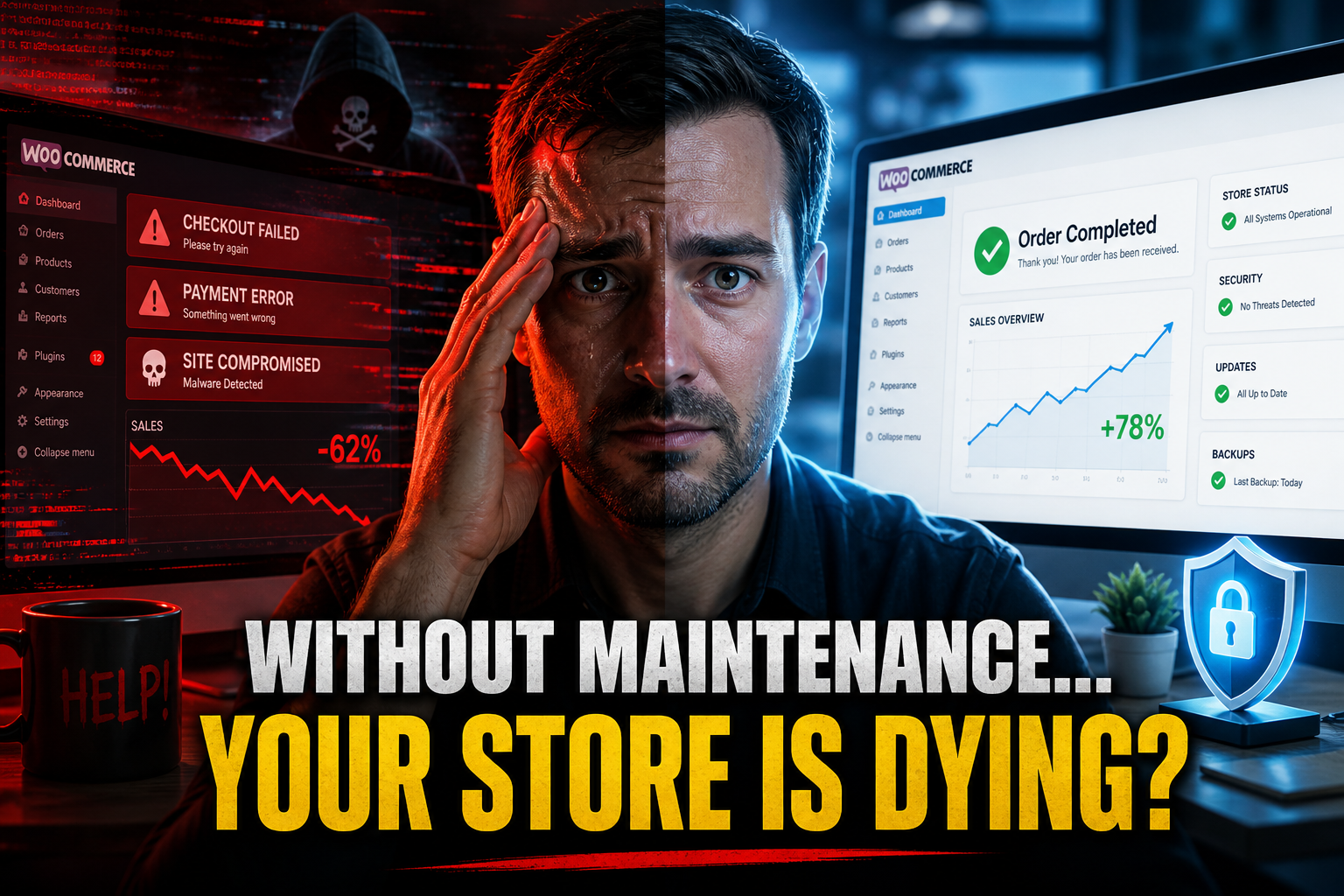
Why WooCommerce Stores Need Dedicated Maintenance (And What Happens Without It)
WooCommerce powers millions of online stores worldwide — but unlike a simple brochure website, a WooCommerce store is a complex system with payment gateways, inventory management, customer data, and dozens of interdependent plugins. That complexity makes maintenance not just useful, but essential.
Table of Contents
WooCommerce Is Not a Set-and-Forget Platform
Many store owners launch their WooCommerce site and assume it will run itself. For a while, it might. But underneath the surface, plugins become outdated, security vulnerabilities accumulate, and conflicts between payment gateways and plugins quietly develop. By the time something visibly breaks — a failed checkout, a payment error, a Google warning — the damage is already done.
What Goes Wrong Without Regular Maintenance
The most common issues we see in neglected WooCommerce stores:
- Broken checkout flows caused by plugin conflicts after an unmanaged update
- Payment gateway failures when a gateway plugin updates but other dependencies don’t
- Security breaches that expose customer payment data and personal information
- Performance degradation as the database grows and old transient data accumulates
- Google blacklisting after malware redirects customers to phishing sites
Any one of these can cost more in lost revenue and recovery time than months of proper maintenance.
Updates Are Riskier for WooCommerce Sites
On a standard WordPress site, a plugin update that causes a minor visual glitch is annoying. On a WooCommerce store, the same update could break the checkout process and silently cost you every sale for hours — or days if nobody notices.
This is why WooCommerce maintenance requires a different approach: updates need to be tested before being applied to a live store, not just pushed automatically and hoped for the best.
Security Is a Higher Stakes Issue
WooCommerce stores process real payments and store customer data. That makes them a significantly more attractive target than a standard business website. Attackers know that a compromised WooCommerce store can yield credit card skimming opportunities, customer email lists, and access to payment processor accounts.
Proper WooCommerce maintenance includes regular malware scanning, login protection, file integrity monitoring, and security hardening — not as a one-time setup, but as an ongoing process.
The Real Cost of Neglect
A WooCommerce store going down for 24 hours is not just a technical inconvenience. It is lost revenue, damaged customer trust, and potentially a lengthy recovery process involving malware removal, Google blacklist appeals, and payment processor reviews.
Professional WordPress maintenance services like Bearmor handle WooCommerce stores with the extra care they require — testing updates before deployment, monitoring uptime around the clock, and responding quickly when something goes wrong.
What Good WooCommerce Maintenance Looks Like
At a minimum, a properly maintained WooCommerce store should have:
- Plugin and theme updates tested in a staging environment before going live
- Weekly or daily backups stored offsite
- 24/7 uptime monitoring with instant alerts
- Regular security scans and malware checks
- Payment gateway compatibility verified after every major update
- A clear recovery plan if something breaks
The Bottom Line
WooCommerce is a powerful platform — but power comes with responsibility. The stores that run smoothly for years are not lucky; they are maintained. The ones that get hacked, go down during peak sales periods, or lose customer trust through security failures are almost always the ones where maintenance was treated as optional.
If you run a WooCommerce store, maintenance is not an expense. It is insurance.
