

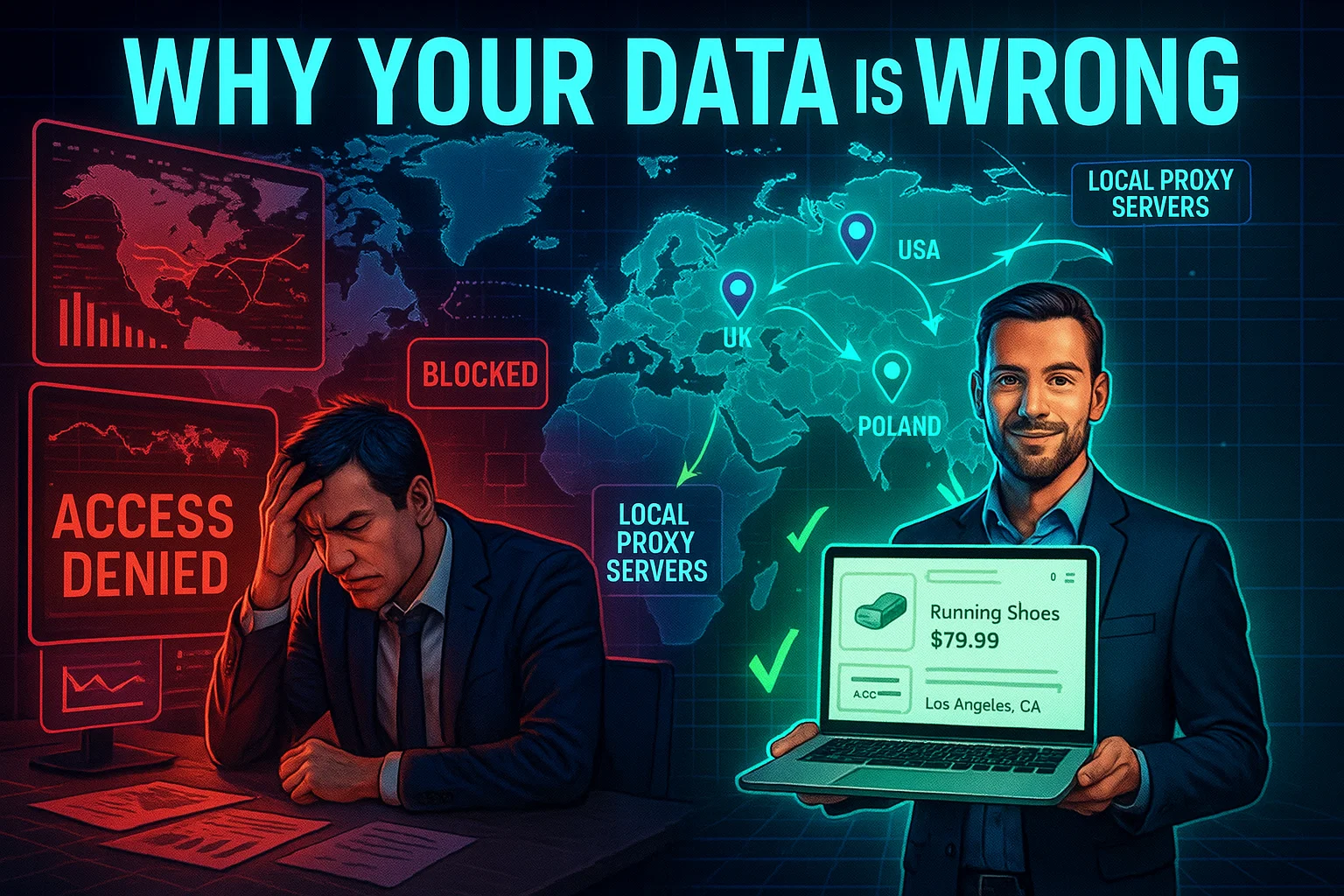
The digital landscape has transformed dramatically over the past decade. Companies now compete across borders, track competitors in real-time, and need accurate data from markets thousands of miles away. At the heart of this transformation sits a technology that many overlook but few can operate without: local proxies.
Whether you’re running SEO campaigns, verifying advertisements, or collecting market intelligence, understanding how local proxies work—and why they matter—can make or break your international strategy. Learn More about how geotargeting and country-specific proxies impact your business legally and operationally.
Table of Contents
What Exactly Are Local Proxies and How Do They Work
Think of local proxies as your digital passport to any country in the world. When you connect to the internet normally, websites see your actual IP address—and with it, your physical location. This creates problems when you need to see what customers in Germany, Poland, the United Kingdom, or the United States actually experience.
Local proxies solve this by routing your internet connection through servers located in specific countries. When you use a proxy server based in Berlin, websites believe you’re browsing from Germany. This opens doors that would otherwise remain firmly closed.
But why does this matter for your business? The answer lies in how the modern internet actually works.
Understanding Geotargeting in Today’s Digital Economy
Every major website, search engine, and advertising platform tailors content based on location. Google shows different search results in New York than it does in London. Amazon displays different prices and products depending on where you’re browsing from. Facebook serves localized advertisements to users based on their geographic location.
This geographic customization creates a significant challenge. How can you verify that your marketing campaigns appear correctly in target markets? How can you check whether your SEO strategies actually work in specific countries? Without local proxies, you’re essentially flying blind.
Why Your Business Needs Local Proxies for Accurate Market Intelligence
I’ve worked with countless marketing teams who initially questioned whether local proxies were worth the investment. Their skepticism disappeared once they saw the data discrepancies between what they assumed was happening in foreign markets and what was actually occurring.
Collecting Genuine Pricing Intelligence
Consider a scenario that plays out daily across global e-commerce. You’re a retailer monitoring competitor pricing in multiple European markets. Without local proxies, you might access a competitor’s German website and see prices—but are those the actual prices German customers see?
Often, they’re not. Many e-commerce platforms detect that you’re browsing from outside their target market and adjust pricing accordingly. Some display inflated prices. Others redirect you to international versions of their sites. A few block access entirely.
Local proxies eliminate this problem. By connecting through German IP addresses, you see exactly what German consumers see. Your pricing intelligence becomes accurate, actionable, and trustworthy.
Verifying Advertisement Placement and Performance
When you’re spending thousands on digital advertising across multiple countries, verification isn’t optional—it’s essential. Local proxies allow marketing teams to confirm that advertisements appear as intended in each target market.
This goes beyond simple visibility checks. You can verify that creative elements render correctly, that landing pages load properly, and that call-to-action buttons function as expected. These details matter enormously when conversion rates hang in the balance.
How Different Proxy Types Serve Different Business Needs
Not all local proxies are created equal. Understanding the distinctions between proxy types helps you choose the right tool for specific tasks.
Datacenter Proxies Offer Speed and Affordability
Datacenter proxies operate from high-speed servers in data centers around the world. They’re fast, reliable, and typically more affordable than alternatives. For tasks like bulk data collection, API automation, or mass website monitoring, datacenter proxies often represent the most practical choice.
However, they come with limitations. Because these IP addresses don’t correspond to physical residential locations, sophisticated websites can sometimes detect and block them. Major platforms have grown increasingly skilled at identifying datacenter traffic.
Residential Proxies Provide Authentic Local Connections
Residential proxies route your connection through IP addresses assigned to actual home internet users. When you use German residential proxies, websites see a genuine German internet connection—because that’s exactly what it is.
This authenticity makes residential proxies particularly valuable for local SEO analysis, competitor research, and any task where appearing as a legitimate local user matters. Search engines and social platforms find it much harder to distinguish residential proxy traffic from genuine user activity.
The trade-off involves cost and availability. Residential proxies typically cost more than datacenter alternatives, and speeds can vary depending on the underlying connection.
Mobile Proxies Excel at Social Media Operations
Mobile proxies represent the newest category in this space. They route traffic through mobile network IP addresses—the same addresses used by smartphone users across cellular networks.
For social media marketing, influencer management, and multi-account operations, mobile proxies offer unmatched effectiveness. Platforms like Instagram, TikTok, and Facebook have invested heavily in detecting suspicious activity, but they treat mobile IP addresses with much higher trust levels.
This makes mobile proxies ideal for agencies managing multiple client accounts, businesses running social media automation, or marketers testing localized social content.
Legal Considerations When Using Local Proxies in Different Countries
Understanding the legal landscape is absolutely critical before deploying local proxies for business purposes. Regulations vary significantly between jurisdictions, and ignorance offers no protection.
Proxy Usage Under American and British Law
In the United States and United Kingdom, using local proxies for legitimate business purposes generally falls within legal boundaries. Accessing publicly available information, monitoring search engine results, and verifying your own advertisements typically raise no legal concerns.
However, terms of service matter. Many websites explicitly prohibit automated access or the use of proxies. Violating these terms might not constitute criminal activity, but it can expose your business to civil liability. Always review the terms of service for websites you intend to access through proxies.
European Regulations Demand Extra Attention
Germany and Poland operate under the General Data Protection Regulation, which imposes strict requirements around data collection and processing. When using local proxies in EU countries, GDPR compliance becomes mandatory.
What does this mean practically? If you’re collecting any information that could identify individuals—even IP addresses—you must handle that data according to GDPR standards. This includes maintaining appropriate security measures, documenting your data processing activities, and potentially obtaining consent where required.
Reputable proxy providers help address these concerns by implementing proper data protection measures on their end. But responsibility for compliance ultimately rests with your organization.
Minimizing Legal and Operational Risks
Several straightforward practices reduce your risk exposure when using local proxies:
Choose established providers with transparent business practices. Fly-by-night proxy services may offer attractive prices, but they often lack the infrastructure and policies necessary for compliant operation.
Use proxies only for their intended legitimate purposes. Market research, SEO analysis, and advertisement verification represent appropriate use cases. Attempting to circumvent security measures or access restricted systems does not.
Document your proxy usage and the business purposes it serves. If questions ever arise, clear documentation demonstrates that your activities were conducted in good faith for legitimate reasons.
How Local Proxies Transform SEO and Marketing Operations
The practical applications of local proxies extend across virtually every aspect of digital marketing. Understanding these applications helps you maximize the value of your proxy investment.
Achieving Accurate Local SEO Insights
Search engine optimization has always required understanding what users actually see when they search. But with personalized, localized search results, this understanding has become increasingly difficult to achieve.
Local proxies restore clarity. By connecting through country-specific IP addresses, you can check keyword rankings as local users experience them. You can analyze competitor positioning in specific markets. You can verify that your local SEO efforts actually produce results.
For agencies managing SEO campaigns across multiple countries, local proxies have become indispensable. They’re the only reliable way to track performance in each target market without physically traveling there.
Enabling Effective Multi-Market Campaign Management
Running marketing campaigns across the United States, Germany, the United Kingdom, and Poland simultaneously requires constant verification. Local proxies make this manageable.
You can confirm that advertisements display correctly in each market. You can verify landing page localization. You can test purchase flows to ensure payment processing works for local customers. And you can do all of this from a single location, using local proxies to simulate the customer experience in each country.
Supporting Automation at Scale
Modern marketing increasingly relies on automation. From data collection to competitive monitoring to social media management, automated systems handle tasks that would overwhelm human teams.
Local proxies enable this automation to function across geographic boundaries. They allow automated systems to access localized content, collect geographically specific data, and operate accounts in multiple regions—all while maintaining the appearance of legitimate local activity.
Selecting the Right Local Proxy Provider for Your Needs
The quality of your proxy provider directly impacts the effectiveness of your operations. Several factors deserve consideration when evaluating options.
Reliability matters enormously. Proxies that frequently disconnect or experience performance issues undermine the value they’re supposed to provide. Look for providers with documented uptime records and robust infrastructure.
Geographic coverage should match your business needs. If you operate primarily in European markets, ensure your provider offers comprehensive coverage across EU countries. If you need global reach, verify availability in all your target regions.
Compliance features have grown increasingly important. Providers who take data protection seriously, implement proper security measures, and operate transparently offer significant advantages over those who treat compliance as an afterthought.
Moving Forward With Confidence in Your Local Proxy Strategy
Local proxies have evolved from technical curiosities into essential business tools. They enable accurate market intelligence, effective marketing verification, and reliable SEO monitoring across international markets.
Success with local proxies requires understanding not just the technology, but the legal and operational considerations that accompany their use. By choosing appropriate proxy types for specific tasks, selecting reputable providers, and maintaining compliance with relevant regulations, your organization can leverage local proxies effectively while minimizing risk.
The businesses that thrive in today’s interconnected markets are those that see clearly across borders. Local proxies provide that clarity—helping you understand exactly what customers experience in every market where you compete.
