

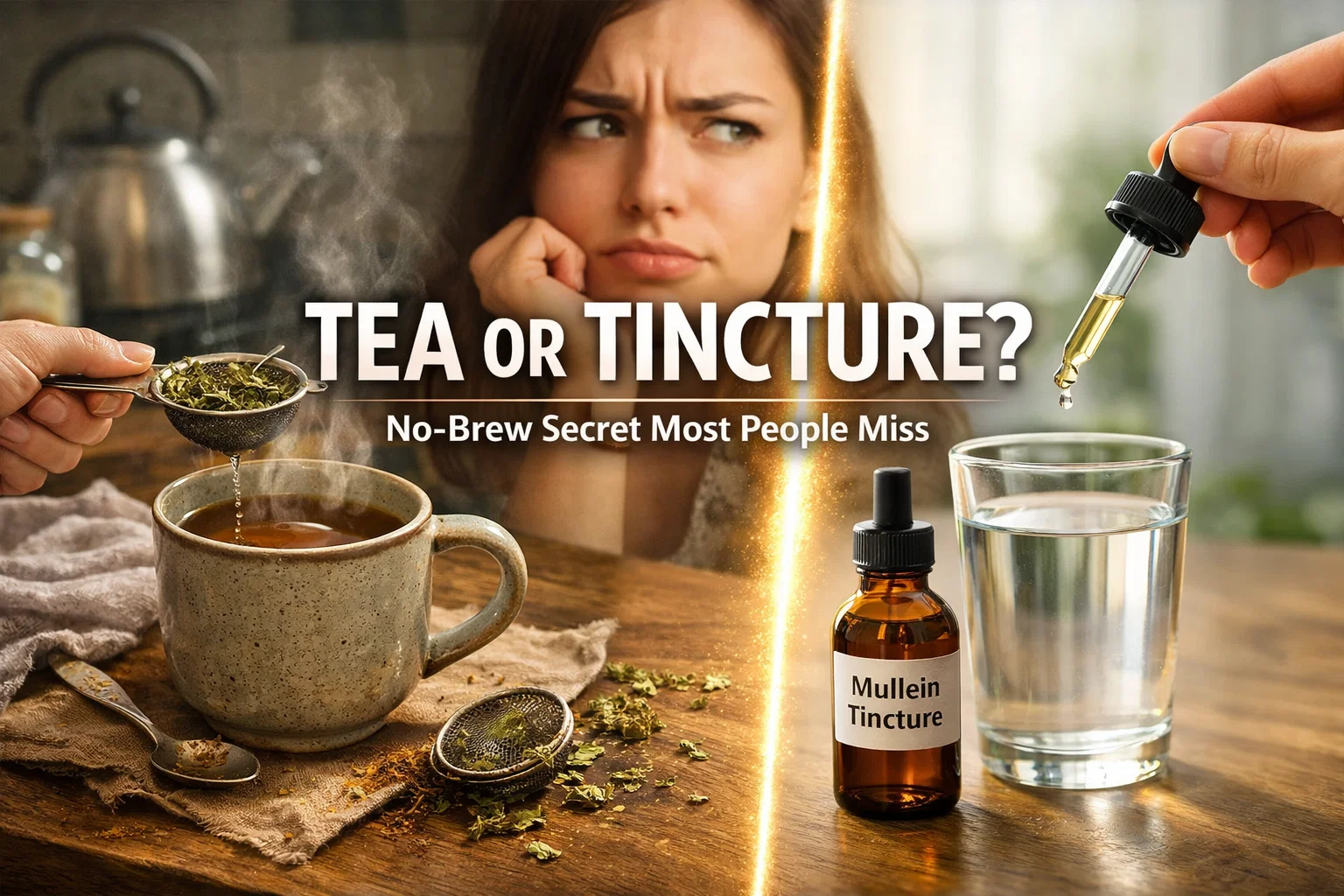
Mullein Tea vs Tincture for No-Brew Use
Mullein Tea vs Tincture is not just a format question. It is a routine question. If you want herbal support without kettles, strainers, steeping time, or cleanup, the better option is usually the one that fits your day with the least friction. Tea feels familiar and gentle. A tincture feels faster and more portable. This guide explains the real difference in plain language, with a focus on convenience, taste, prep time, travel use, and daily consistency.
Table of Contents
What is the real difference between mullein tea and mullein tincture?
The main difference is format and preparation. Mullein tea is an infusion made by steeping mullein leaf or flowers in hot water. Mullein tincture is a liquid herbal extract, usually taken by dropper in a small amount of water or directly, depending on the label directions.
Tea asks for a brewing process. A tincture usually does not. That single point changes the whole user experience.
Tea can feel slower, calmer, and more traditional. A tincture can feel more direct, portable, and routine-friendly. For people who want a no-brew herbal routine, that difference usually matters more than anything else.
Which format is usually better for a no-brew routine?
For most people, a tincture is the easier fit for a no-brew routine.
You do not need hot water, a mug, steeping time, or strainers. You measure the serving, take it, and move on. That simplicity makes tinctures appealing for busy mornings, workdays, travel, and low-effort routines.
Tea can still be a good choice if you enjoy the ritual of brewing. But if your real goal is convenience with minimal steps, tincture usually wins.
How much effort does each one require?
Mullein tea routine
Tea usually requires several steps. You measure the herb or tea bag, heat water, steep it, and often strain it carefully. With mullein, good straining matters because fine leaf hairs can make the tea less comfortable to drink if they remain in the cup.
Mullein tincture routine
A tincture usually requires fewer steps. You check the label, measure the serving with the dropper, and take it. Some people add it to water. Others prefer a small amount of juice, if the product directions allow that kind of use.
What this means in real life
Tea takes more time and more attention. A tincture usually takes less time and fewer tools. If you know that you skip routines when they become too involved, that difference matters.
Quick comparison table: mullein tea vs tincture
| Factor | Mullein Tea | Mullein Tincture |
|---|---|---|
| Prep required | Higher | Lower |
| Need for brewing | Yes | No |
| Need for straining | Often yes | No |
| Routine speed | Slower | Faster |
| Travel convenience | Lower | Higher |
| Taste style | Milder but still herbal | More concentrated |
| Ritual feel | Higher | Lower |
| Fit for busy schedules | Moderate | High |
Does taste change the decision?
Yes. Taste can completely change which format feels realistic.
Tea often tastes gentler because it is diluted in hot water. That can make it easier for some people, especially if they are sensitive to strong plant extracts. But mullein tea still tastes herbal, and the preparation itself adds effort.
Tinctures are more concentrated. Even in water, the flavor can feel sharper and more immediate. Some people do not mind that because the process is so quick. Others prefer tea because the flavor experience is softer, even though it takes more time.
If your main goal is no brewing, tincture still makes more sense. If your main goal is a milder taste, tea may feel more approachable.
When does tea make more sense than tincture?
Tea makes more sense when you want the routine itself to feel slower and more familiar. Some people do better with a warm cup than with a dropper bottle. The act of brewing can feel grounding and easier to remember because it becomes part of an existing habit.
Tea may also be a better fit if you prefer a more diluted herbal taste. A tincture is quicker, but the taste can feel more concentrated. That tradeoff matters for beginners.
There is also a practical comfort factor. Some people simply trust tea more because it feels like food and drink, not a supplement bottle. That does not make it better. It just makes it more natural for some routines.
When does tincture make more sense than tea?
Tincture usually makes more sense in these situations:
- you want the fewest possible steps;
- you do not want to brew anything daily;
- you need a portable option for work or travel;
- you want a routine that takes less than a minute;
- you know you are less likely to stick with a brew-and-strain process.
For people with busy schedules, tinctures often solve the biggest routine problem: too much setup. That is why the no-brew angle points so naturally toward tincture.
Is one format more beginner-friendly?
It depends on what kind of beginner you are.
Tea is beginner-friendly if you already drink herbal teas
If you already use infusions, kettles, and tea mugs, mullein tea may feel intuitive. It fits an existing habit.
Tincture is beginner-friendly if you want less friction
If you are new to herbs and want the easiest possible daily format, tincture is often simpler. It asks less from your schedule.
The better beginner format is the one you will actually use
This matters more than theory. A “better” format on paper does not help if it sits unused in the kitchen.
How do tea and tincture compare for consistency?
Consistency is where routine design matters most. In practice, people often stop using products that create too many small barriers. Brewing water, waiting several minutes, straining carefully, washing tools, and repeating that every day can be enough to break the habit.
A tincture lowers that barrier. It is not always more pleasant, but it is often easier to repeat. For a no-brew routine, that usually gives it an advantage.
If you value compliance, simplicity often beats idealism. The best format is often the one that fits your actual life, not the one that sounds most traditional.
What about travel, work, and portability?
This is another area where tincture often comes out ahead.
At home
Both formats can work well at home. Tea fits slower mornings or evening routines. Tincture fits faster schedules.
At work
Tinctures are usually easier if you want something quick. Tea requires access to hot water and time to brew, which is not always realistic.
While traveling
Tinctures are usually more convenient because they remove the need for brewing. Tea can still work if you travel with tea bags and have reliable access to hot water, but it is rarely the lower-effort option.
Decision table: which format fits which person?
| User type | Better fit | Main reason |
|---|---|---|
| Wants a no-brew routine | Tincture | No steeping or straining |
| Enjoys tea rituals | Tea | Warm, familiar routine |
| Needs fast daily use | Tincture | Lower time demand |
| Prefers milder taste | Tea | More diluted flavor |
| Travels often | Tincture | More portable in daily use |
| Already drinks herbal teas | Tea | Fits current habits |
Are there any practical downsides beginners should know about?
Yes. Each format has its own friction points.
Tea downsides
Tea takes time. It may need careful straining. It can feel inconvenient on busy days. If you dislike prep work, that matters.
Tincture downsides
Tinctures can taste stronger than tea. Some people dislike the concentrated flavor enough that they avoid using them. That is important because fast only helps if the product remains usable for you.
What this means for a beginner
If you are choosing between tea and tincture, do not ask only what sounds good. Ask what you can repeat with the least resistance.
What should you check on the label before buying?
Read the serving size, ingredient panel, and product directions. A mullein tea product may contain only mullein, or it may be part of an herbal blend. A tincture may also contain additional herbs or other inactive ingredients.
Look for clarity. The label should tell you what part of the plant is used, how much is suggested per serving, and how to use the product. If the formula is a blend, make sure that matches your goal.
If you take medications, are pregnant, breastfeeding, or have a medical condition, use a cautious approach and check with a qualified healthcare professional before starting a new supplement. Human evidence for mullein remains limited, so exaggerated expectations are not helpful.
Checklist: how to choose between mullein tea and tincture
- Choose tincture if you want no brewing at all.
- Choose tea if you enjoy warm herbal routines.
- Choose tincture if speed matters more than ritual.
- Choose tea if you prefer a milder taste experience.
- Think about where you will use it most: home, work, or travel.
- Check whether the product contains only mullein or a blend.
- Review serving directions before buying.
- Pick the format that feels easiest to repeat consistently.
What is the simplest answer for people who do not want to brew herbs?
If your goal is specifically a no-brew herbal routine, mullein tincture is usually the better fit. It reduces prep, shortens routine time, and removes the need for steeping and straining.
Mullein tea still makes sense for people who value warmth, ritual, and a softer flavor profile. But when convenience is the first priority, tincture usually has the advantage.
FAQ
Which is better for a no-brew routine, mullein tea or tincture?
Mullein tincture is usually better because it does not require steeping or straining.
Is mullein tea easier to tolerate than tincture?
For some people, yes. Tea often has a milder taste because it is more diluted.
Does mullein tea require straining?
Often yes. Careful straining can help remove fine plant material from the cup.
Is tincture faster than tea?
Usually yes. A tincture often takes less than a minute to measure and use.
Which is better for travel?
Tincture is usually more convenient because it removes the need for brewing tools and hot water.
Can beginners start with tea instead of tincture?
Yes. Tea can be a good starting point if you already enjoy herbal tea routines.
Does one format work better than the other for everyone?
No. The best choice depends on taste preference, routine style, and how much effort you want to spend each day.
Glossary
Infusion
A preparation made by steeping herbs in hot water.
Tincture
A liquid herbal extract taken in small measured amounts.
Serving size
The amount of product suggested for one use on the label.
Herbal routine
A repeated daily or regular pattern of using herbal products.
Straining
The process of filtering plant material out of a brewed liquid.
Extract
A concentrated preparation made from plant material.
Ingredient panel
The label section that lists active and inactive ingredients.
Compliance
The ability to follow a routine consistently over time.
Conclusion
In the mullein tea vs tincture comparison, tincture is usually the better fit for people who want a no-brew herbal routine. Tea offers a gentler ritual, but tincture usually wins on speed, portability, and low-effort consistency.
Used Sources
Consumer overview of mullein tea, preparation context, and practical use considerations, WebMD mullein tea overview — webmd.com/diet/health-benefits-mullein-tea
General educational overview of mullein tea with beginner-friendly context around preparation and use, Healthline mullein tea overview — healthline.com/nutrition/mullein-tea
Reference summary noting limited clinical evidence for mullein and supporting a cautious, non-claim-based framing, Drugs.com mullein monograph — drugs.com/npp/mullein.html
Herbal reference context for mullein and traditional preparation formats, Botanical safety and herb reference materials — ncbi.nlm.nih.gov/books and drugs.com
