

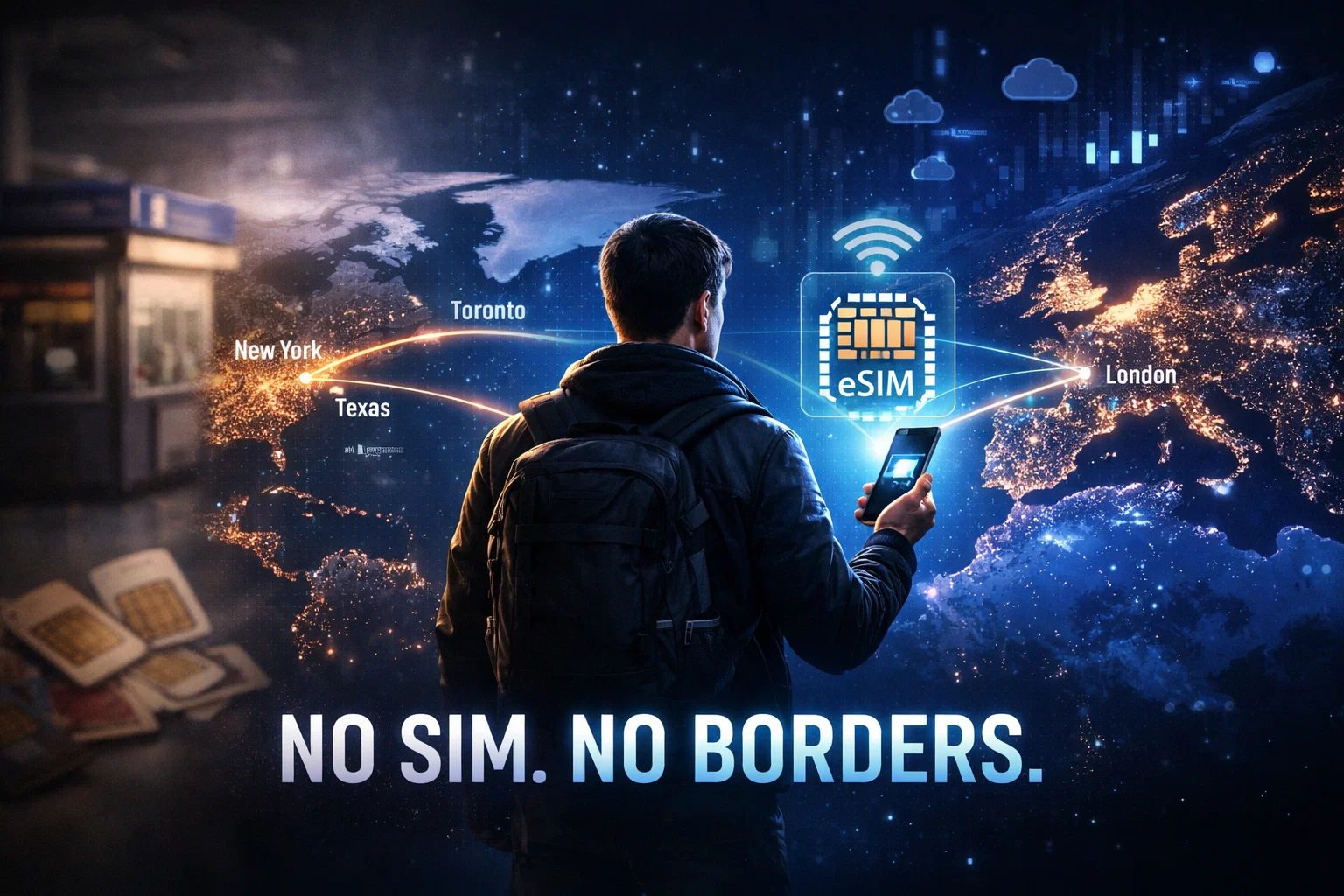
Digital eSIM Connectivity and the Future of International Travel
Over the past decade, mobile connectivity has quietly shifted from a physical limitation into a flexible digital service. What was once dependent on plastic SIM cards, retail kiosks, and local operators is now increasingly driven by embedded SIM technology, commonly known as eSIM. This transition is not merely a technical upgrade; it is a structural change that affects how travelers, businesses, and digital nomads stay connected across borders.
The relevance of this shift is especially visible in regions with high mobility, such as the United States and Canada, where frequent domestic and international travel creates demand for seamless network access. States like New York and Texas, both major business and travel hubs, illustrate how global connectivity expectations have evolved. Travelers no longer plan connectivity as a separate task; it is expected to work immediately, reliably, and without friction.
Table of Contents
Why eSIM Has Become a Strategic Tool for Modern Travelers
Unlike traditional SIM cards, eSIM profiles can be installed digitally without physical handling. This seemingly small change removes several long-standing barriers. There is no dependency on store availability, no language barrier during purchase, and no need to replace hardware while switching networks. For international travelers, this means connectivity can be prepared before departure and activated upon arrival.
The implications extend beyond convenience. eSIM adoption reduces downtime, minimizes roaming surprises, and enables clearer cost control. From a technological standpoint, it also aligns with the broader movement toward software-defined infrastructure, where services are provisioned dynamically rather than tied to physical components.
Platforms such as eSIM Europe focus on presenting structured information about regional eSIM options, coverage expectations, and practical usage scenarios. For users navigating unfamiliar telecom environments, access to consolidated, neutral information plays a critical role in decision-making.
Connectivity Expectations in a Cross-Border Digital Economy
As work patterns evolve, connectivity is no longer limited to leisure travel. Remote work, short-term relocation, and international collaboration have become standard across many industries. A consultant traveling between New York and European cities, or a startup team coordinating between Texas and Canada, requires uninterrupted access to cloud services, communication tools, and secure networks.
In this context, mobile connectivity becomes part of digital infrastructure rather than a consumer add-on. The choice of network access affects productivity, security, and operational continuity. eSIM solutions address these needs by offering predictable access models that are independent of local telecom contracts.
From an analytical perspective, this shift mirrors trends seen in cloud computing and SaaS adoption. Flexibility, scalability, and transparency are prioritized over long-term lock-in. Informational resources like eSIM Europe reflect this change by focusing on clarity, regional differences, and realistic expectations instead of promotional messaging.
As device manufacturers continue to standardize eSIM support and regulators adapt to cross-border digital services, the role of physical SIM cards will likely diminish further. What remains essential is not the medium itself, but access to accurate, up-to-date knowledge that allows users to make informed connectivity choices in an increasingly mobile world.
