

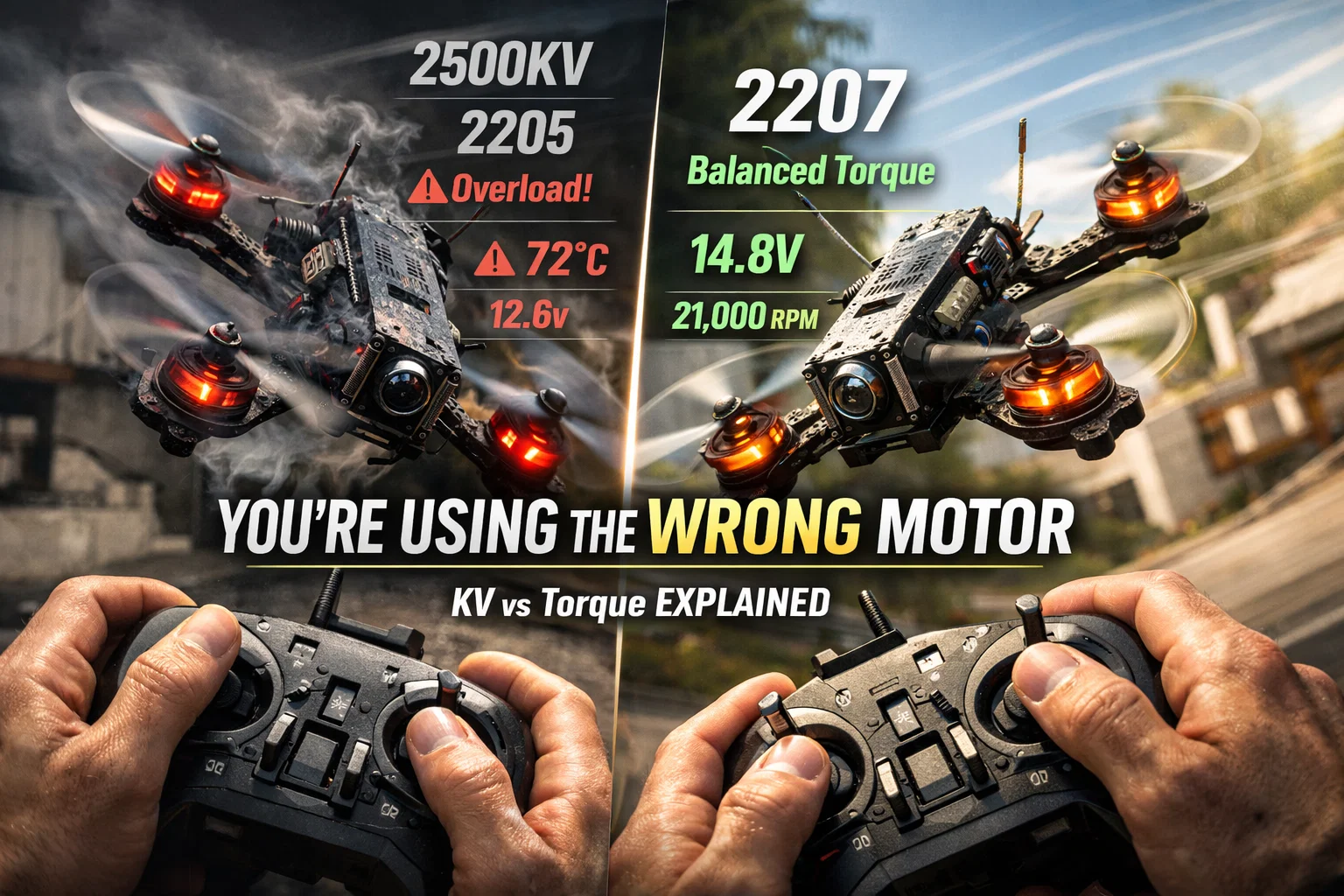
Picking the right motors often feels like trying to solve a puzzle where the pieces keep changing size. You see dozens of numbers like 2207 or 2306.6, followed by a KV rating that promises insane speed. Most beginners make the mistake of chasing the highest top-end velocity, but they end up with a drone that feels like a boat in the corners. If you want a machine that actually responds to your fingers, you need to understand how stator size and magnets interact with your propellers. Serious pilots usually grab their gear from a reliable source like FPV Monster because they know that cheap, generic motors will just vibrate themselves to death after three sessions of hard flying.
Table of Contents
Stator size and the physics of torque
The four-digit number on the side of your motor tells you the width and height of the stator inside. A 2207 motor has a wider and taller stator than a 2205, which translates directly to more surface area for the magnets and coils. This extra mass provides the torque needed to change the direction of your propellers instantly. When you pull out of a high-speed dive and need to stop the drone from hitting the ground, torque is what saves you.
If you prefer a “snappy” feel where the quad reacts to every tiny twitch, a wider stator like a 2306 might be your best bet. It tends to have a bit more low-end grunt. On the other hand, the taller 2207 stators often provide a smoother top-end, making them a favorite for racing or high-speed cinematic chases where you need consistent power throughout the throttle range.
Understanding KV ratings without the fluff
KV isn’t a measure of quality; it’s a constant that tells you how many revolutions per minute the motor spins for every volt applied. High KV motors spin faster but draw significantly more current from your battery. If you pair a 2500KV motor with a 6S battery and a heavy propeller, you will likely smoke your ESC before the first pack is finished.
Most modern freestyle builds have standardized on these combinations:
- 1700KV to 1950KV for 6S power setups to keep efficiency high.
- 2300KV to 2600KV for older 4S setups that need the extra RPM.
- Lower KV (around 1200KV-1500KV) for long-range 7-inch cruisers.
Thermal management and durability in the field
Heat is the silent killer of FPV electronics. When a motor gets too hot, the magnets lose their strength, and the enamel on the copper windings can melt, causing a short circuit. High-quality motors use better cooling fins and open-base designs to pull air through the coils during flight. You can feel this after a flight. If your motors are too hot to touch, your tune is probably noisy or your propellers are too aggressive for the motor size.
Durability is another factor that separates pro gear from budget options. A crash that bends a cheap aluminum bell will barely scratch a titanium alloy shaft. I always look for motors with a single-piece bell design. They handle the inevitable concrete “testing” much better than multi-part bells that tend to fly apart when you clip a gate at 80 miles per hour.
Choosing the right propeller pairing
You cannot talk about motors without mentioning props. A heavy, high-pitch propeller gives you tons of grip in the air, but it makes the motor work harder. It’s like driving a car in fifth gear while trying to go uphill. If you find your motors struggling to maintain altitude, try switching to a lighter propeller with a lower pitch. This reduces the load on the motor, lowers your battery consumption, and usually results in a much smoother HD video feed because the motors aren’t constantly fighting to stay synchronized.
Investing in a solid set of motors is the most direct way to improve how your drone feels. Stop looking at just the price tag and start looking at the bearings and the magnet grade. A smooth motor makes tuning your flight controller ten times easier. When your hardware is balanced and powerful, you spend less time in the configuration software and more time actually burning through packs at the local park.
