

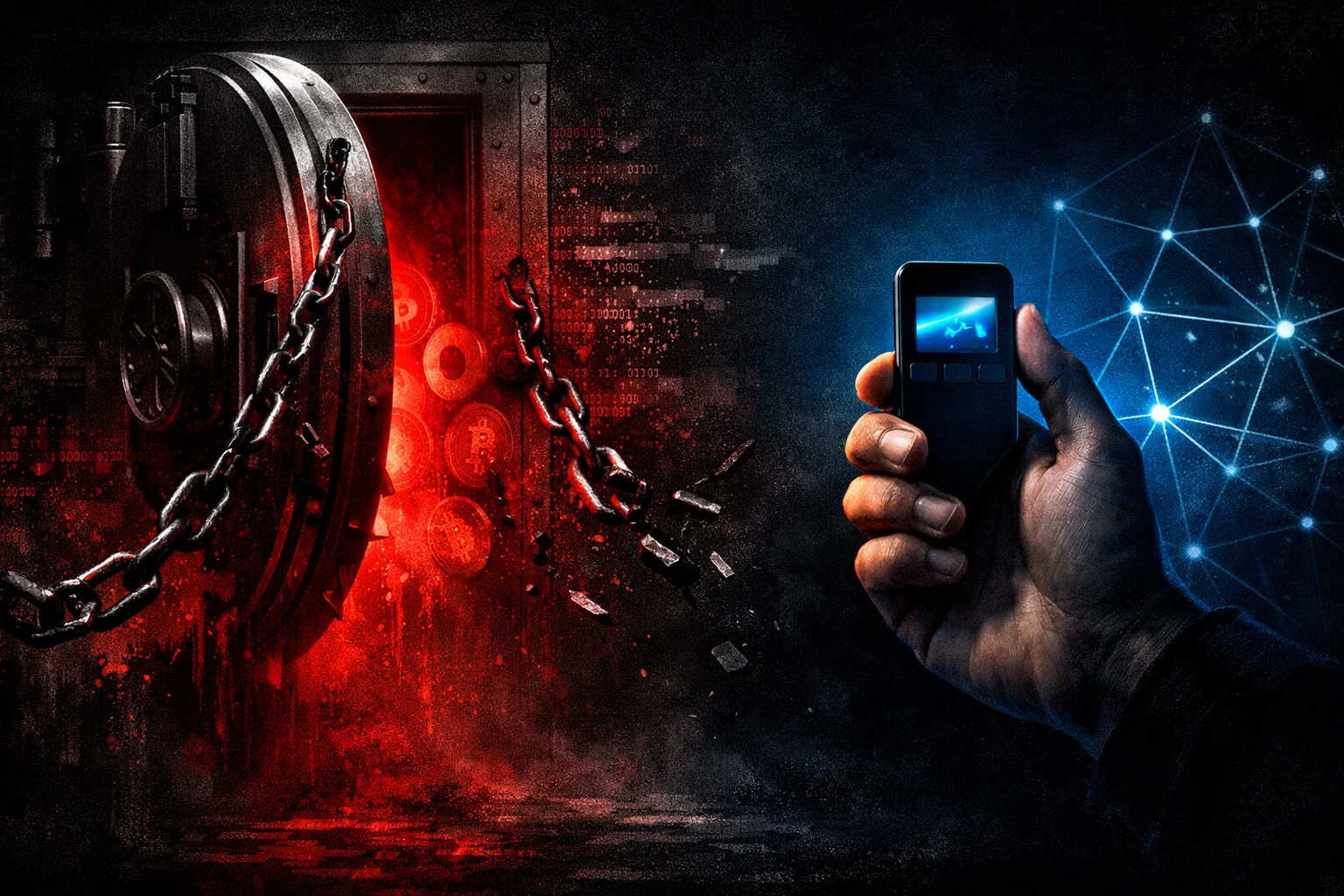
There is something fundamentally different happening in how people think about trading cryptocurrency, and it has less to do with the tokens themselves than with who holds them during the transaction. The rise of platforms like BlazeSwap signals a broader reckoning with trust, one that centralized exchanges spent years building and then, in some rather spectacular cases, squandering entirely. When you strip away the marketing language and the excitement around decentralized finance, what Blaze Swap actually offers is remarkably simple: the ability to trade tokens on the Flare network without handing them over to an intermediary, even temporarily, which sounds less like innovation and more like how trading probably should have worked from the beginning.
Why the Conversation Around Non-Custodial Trading Changed So Dramatically
The collapse of several major centralized exchanges between 2022 and 2024, which collectively held billions in customer assets that customers subsequently discovered they could not access, did more for the adoption of decentralized exchanges than any marketing campaign ever could. This is not speculation or cheerleading for one model over another, but rather an observation about how trust operates in financial systems and what happens when that trust evaporates overnight.
BlazeSwap operates on a premise that would have seemed unnecessarily complicated to mainstream users just a few years ago but now feels almost obvious in its logic. Your tokens stay in your wallet, the platform provides access to liquidity pools where you can execute swaps, and every transaction requires your explicit signature before anything moves. The exchange itself never takes custody, which means there is nothing to freeze, nothing to mismanage, and critically, nothing to lose if the platform’s operators make poor decisions or face regulatory pressure in jurisdictions you have never visited.
What makes Blaze Swap particularly interesting in this context is not that it invented this approach, because it certainly did not, but that it focused specifically on the Flare ecosystem at a time when that network needed exactly this kind of infrastructure. Building for a smaller network involves trade-offs that larger platforms avoid, but it also creates opportunities for optimization and community integration that sprawling multi-chain operations struggle to replicate.
How the Actual Mechanics of BlazeSwap Differ From What You Might Expect
If you approach BlazeSwap expecting the complexity that often accompanies decentralized finance applications, you will likely find yourself surprised by how little friction exists between deciding to trade and actually completing that trade. The interface asks you to connect a wallet, which involves clicking a button and approving the connection through whatever wallet software you prefer, and then presents you with a straightforward swap interface that shows exactly what you will pay and what you will receive.
The liquidity that makes these swaps possible comes from pools rather than order books, which represents a fundamental architectural difference from traditional exchanges that carries both advantages and limitations worth understanding. When you trade through Blaze Swap, you are essentially trading against a pool of tokens that other users have deposited, and the price you receive depends on the ratio of tokens in that pool at the moment of your transaction. This automated market maker approach removes the need for matching buyers and sellers, which eliminates certain categories of delay and manipulation, but it also means that large trades can move prices significantly within a single transaction.
Slippage, the difference between expected and actual execution price, becomes a practical consideration rather than a theoretical one when you trade on platforms like BlazeSwap. The interface addresses this by showing you exactly what to expect and allowing you to set tolerance levels that prevent transactions from executing if prices move beyond your comfort zone. Whether this represents adequate protection depends entirely on your trading style and the specific tokens involved, but the transparency itself marks a departure from platforms where hidden fees and execution surprises have historically been common complaints.
The Question of Fees and Why Transparency Matters More Than Cheapness
Industry observers often focus on fee comparisons when evaluating exchanges, creating spreadsheets and charts that suggest users should chase the lowest possible transaction costs without considering what those fees actually pay for. BlazeSwap maintains a fee structure that funds liquidity providers, the users who deposit token pairs into pools and accept certain risks in exchange for earning a portion of trading activity.
This arrangement creates an ecosystem where users who provide liquidity effectively subsidize the trading experience for users who simply want to swap tokens, which sounds exploitative until you consider that liquidity providers choose this role precisely because they find the returns attractive. According to data from decentralized exchange trackers, liquidity provision across major platforms generates annualized returns that vary wildly based on pool selection and market conditions, with some pools producing double-digit percentages while others barely cover the opportunity cost of locking up capital.
The network fees that accompany every BlazeSwap transaction have nothing to do with the platform itself and everything to do with blockchain economics. Flare validators process transactions and receive compensation through gas fees, which fluctuate based on network demand. Blaze Swap displays these costs before you confirm any action, but controlling them requires understanding when network activity tends to peak and timing your trades accordingly, a skill that separates regular users from those who optimize every interaction.
When Providing Liquidity Makes Sense and When It Probably Does Not
The option to provide liquidity through BlazeSwap appeals to users who hold tokens they do not plan to sell immediately and want those holdings to generate returns rather than sitting idle. The mechanics involve depositing equal values of two tokens into a pool, receiving liquidity provider tokens that represent your share, and earning fees proportional to that share as other users trade through the pool.
This sounds straightforward until you encounter impermanent loss, a phenomenon that confuses even experienced participants and causes genuine financial impact when token prices diverge significantly. If you deposit two tokens into a Blaze Swap pool and one doubles in value while the other stays flat, you end up with less total value than if you had simply held both tokens separately. The fees you earned might offset this loss, or they might not, depending on trading volume and how long you maintained your position.
Whether liquidity provision makes sense for any individual depends on factors that no article can assess from a distance: your time horizon, your conviction about relative price movements between paired tokens, your need for liquidity in your own holdings, and frankly, your tolerance for complexity that might not justify the returns. BlazeSwap makes participation accessible, but accessibility should not be confused with suitability.
Why BlazeSwap Appears Under Different Names Across the Web
Search for information about this platform and you will encounter variations including Blaze Swap and occasionally BlazeSwap XYZ in older directories and aggregator sites. This naming inconsistency reflects how platforms evolve and how third-party sites catalog information rather than indicating any actual differences in the underlying service.
The consolidation around BlazeSwap as the primary identifier simplifies things for users trying to verify they have found the legitimate platform, but it also highlights the broader challenge of navigating a space where scams frequently impersonate established projects. Verifying you are interacting with the correct smart contracts matters far more than the name displayed in your browser tab, though both deserve attention.
What the Latest Incentive Programs Suggest About Platform Strategy
The April 2025 announcement of USDT0 and USDT incentives on BlazeSwap follows earlier programs targeting FAssets on Songbird and rFLR emissions on Flare, creating a pattern that reveals how decentralized exchanges compete for the liquidity that makes them useful. These incentives essentially pay users to provide liquidity in specific pools, temporarily boosting returns to attract capital that might otherwise flow to competing platforms or remain uninvested.
Evaluating these programs requires skepticism about sustainability alongside appreciation for the opportunities they create. Incentivized returns eventually normalize as programs end and participants redistribute capital toward the next attractive option. Blaze Swap users who chase incentives should understand they are participating in a competitive dynamic that benefits them only as long as they correctly time their entries and exits.
This approach to growth is neither unique to BlazeSwap nor inherently problematic, but it does mean that the platform’s current liquidity depth may not represent its permanent state. The decentralized exchange landscape rewards platforms that can transition incentivized users into organic participants, and that transition depends on factors including user experience, network effects, and continued development that remains relevant as the broader ecosystem evolves.
Connecting Your Wallet and Making Your First Swap
The practical experience of using BlazeSwap involves fewer steps than the explanatory content might suggest. Configure your wallet for the Flare network, ensure you hold tokens you want to trade plus a small amount of network tokens for gas, and navigate to the platform interface. Connecting requires approving a request from your wallet, which grants the interface permission to read your address and balances without granting any permission to move funds.
Selecting tokens, entering amounts, and reviewing quotes happens through an interface designed for clarity rather than complexity. Blaze Swap displays the route your swap will take, the fees involved, and the minimum amount you will receive given your slippage settings. Confirming initiates a transaction that your wallet asks you to sign, after which the blockchain processes the swap and deposits your new tokens directly into your wallet.
Failed transactions occasionally occur when market movements exceed your slippage tolerance or when gas estimation proves insufficient for network conditions. These failures cost gas fees without completing the intended swap, a frustrating but ultimately protective mechanism that prevents you from receiving significantly less than expected.
How BlazeSwap Fits Into the Broader Decentralized Finance Conversation
Placing BlazeSwap within the larger context of decentralized finance requires acknowledging that the platform serves a specific network and user base rather than competing directly with multi-chain giants that process billions in daily volume. This focus creates advantages in terms of optimization and community alignment, but it also means that the platform’s relevance depends substantially on Flare’s continued development and adoption.
The question of whether decentralized exchanges eventually replace centralized alternatives or simply coexist as options for different use cases remains genuinely unresolved despite confident predictions from both camps. Blaze Swap exists within this uncertainty, offering a trading experience that prioritizes user control while accepting the limitations that come with operating outside traditional financial infrastructure.
Regulatory developments will inevitably shape how platforms like BlazeSwap evolve, though predicting specific impacts requires speculation beyond what current information supports. The non-custodial model creates certain regulatory ambiguities that centralized exchanges do not face, which could prove advantageous or problematic depending on how jurisdictions ultimately approach decentralized finance infrastructure.
Questions That New Users Consistently Ask About the Platform
Does using BlazeSwap require trusting the platform with my funds?
The non-custodial architecture means your tokens remain in your wallet until the blockchain itself executes a swap you have approved. Trust extends to the smart contract code functioning as intended, which differs meaningfully from trusting a company to manage assets on your behalf.
What happens if BlazeSwap stops operating?
Your tokens remain yours regardless of what happens to the platform interface. The smart contracts exist independently on the blockchain, though accessing them would require technical knowledge or alternative interfaces if the primary website became unavailable.
How does Blaze Swap handle different token standards?
The platform supports tokens compatible with the Flare network’s EVM implementation, which includes most standard token types. Compatibility issues occasionally arise with non-standard implementations, making verification before large transactions worthwhile.
Why would anyone provide liquidity instead of simply holding tokens?
The fee income from trading activity can generate returns that exceed what idle tokens would produce, though impermanent loss risk means this calculation is more complex than simple yield comparisons suggest.
Where This Leaves Users Considering Decentralized Trading
The choice to use BlazeSwap or platforms like it ultimately reflects a judgment about what matters most in a trading experience. Users who prioritize custody and transparency find obvious appeal in the model, while those who value customer support, fiat on-ramps, and interface polish might reasonably prefer centralized alternatives despite their drawbacks.
What seems increasingly clear is that the option to trade without intermediaries has moved from fringe experiment to established alternative, and platforms like Blaze Swap demonstrate that this approach can work without requiring users to become blockchain experts. Whether this represents the future of trading or simply an important option within a diverse ecosystem probably matters less than whether it serves your specific needs effectively.
The tools exist, the infrastructure continues maturing, and the decision about how to engage with decentralized finance remains, as it should, entirely yours to make.
