

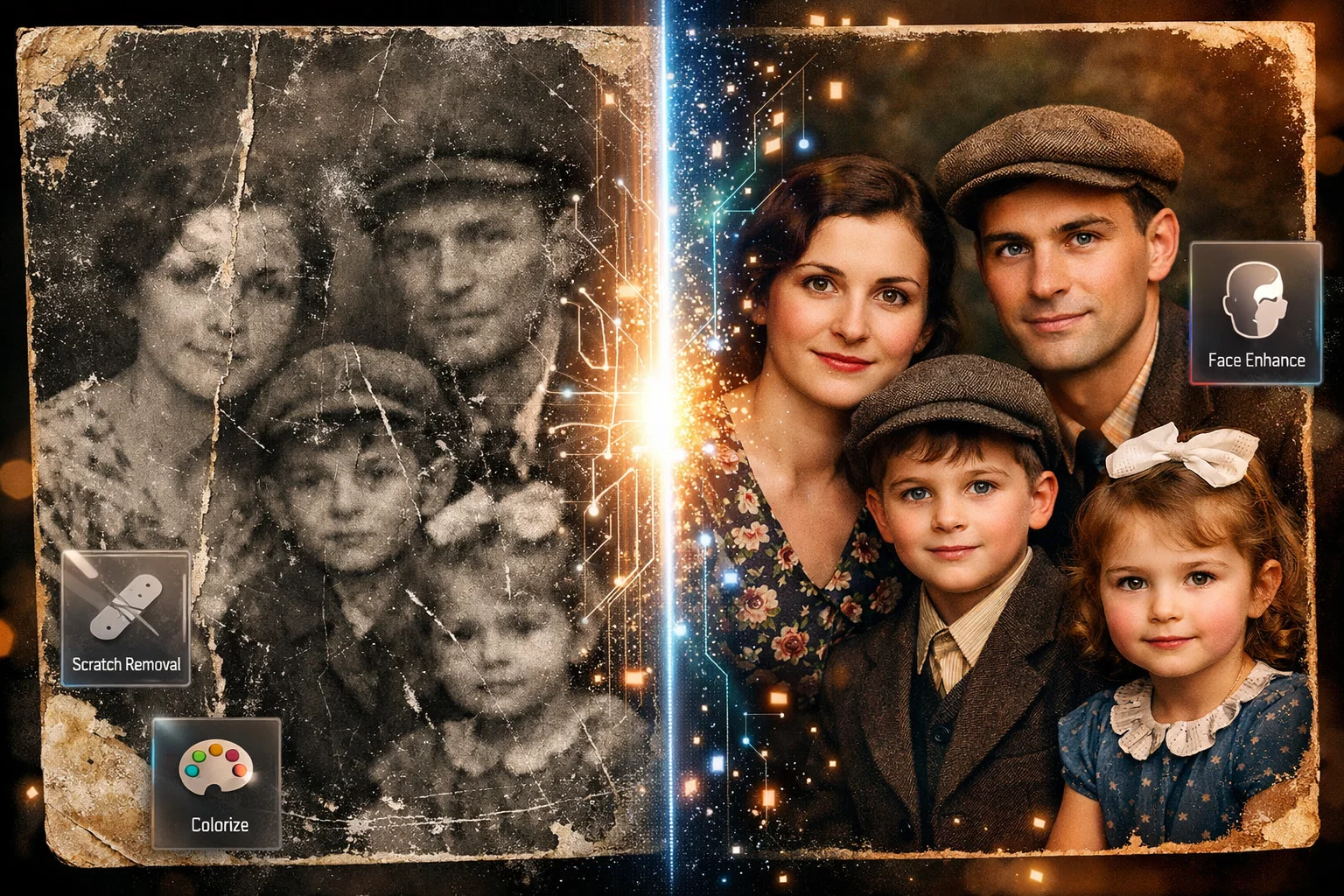
Photography serves as the primary visual record of human history, but physical prints are susceptible to the passage of time. The purpose of Image Enhancement Tools focused on restoration is to preserve and revitalize these historical assets. Many family archives consist of photos that are cracked, faded, or stained. AI models trained specifically on the patterns of damage and the physics of light can intelligently fill in missing segments, remove digital “noise,” and even sharpen features that have been blurred by aging chemicals. This technology ensures that cultural and personal heritages remain vivid for future generations.
The target audience for photo restoration AI includes genealogists, historical societies, museum curators, and individual families looking to digitize their archives. For professionals, it provides a tool to restore massive archives with a level of efficiency that was previously impossible. For individuals, it offers a deeply emotional benefit, allowing them to see their ancestors in high definition or in full color for the first time. By simplifying a process that used to require a master artist’s touch, AI has turned photo restoration from a niche, expensive service into an accessible digital commodity.
The benefits of this technological leap are profound. Firstly, it offers a degree of accuracy in “inpainting” that manual cloning and healing tools often struggle to match. The AI understands the context of the image—such as the structure of a face or the pattern of a vintage suit allowing it to reconstruct missing parts realistically. Secondly, AI colorization models can analyze greyscale values and assign realistic colors based on historical data, bringing a sense of “realism” to black-and-white era photography. This helps viewers connect more deeply with the subjects of the past, making history feel more immediate and relatable.
Usage involves scanning the physical photo and uploading the digital copy to the AI platform. The user can then select specific restoration functions, such as “scratch removal,” “face enhancement,” or “colorization.” The AI processes the image, often providing a “before and after” comparison so the user can verify the integrity of the restoration. Some tools also include an “upscaling” step to ensure the final result is suitable for modern printing standards. For those interested in the broader landscape of generative visual technology, AI Market Cap offers a comprehensive overview of the top-rated restoration services currently available.
